Today’s LASIK patient psychology in 2025, if you want to understand the people’s needs you must observe their lifestyle convenience, improved aesthetics, and their desire for long-term freedom from glasses and contact lenses. As clinics refine their LASIK digital marketing strategies, it’s clear that patients now make decisions based on emotional, practical, and technological motivations seeking confidence, hygiene benefits, and better performance in daily life, sports, or careers.
These insights are becoming essential for your LASIK marketing strategies, where you can understand through real patient behaviour that helps your clinics communicate value more effectively.

Chart by Spherical Insights
Key Motivations Behind LASIK Decisions :-
- Aesthetic Appeal
Many patients choose LASIK to enhance their appearance, avoid glasses, and feel younger or more confident.
- Convenience and Freedom
Buyers are increasingly motivated by the desire to eliminate daily hassles with glasses or contact lenses especially during travel, sports, or demanding jobs.
- Cost Savings
With rising expenses for contact lenses, frames, and eye exams, many patients see LASIK as a long-term financial investment, especially in urban markets.
- Technology and Customization
Modern buyers trust personalized treatment plans, AI-assisted diagnostics, and advanced laser technologies that promise better accuracy and faster recovery.
Common Pain Points and Objections
- Fear of Surgical Risks
Concerns about complications (dry eyes, glare, halos, or rare adverse outcomes) remain major fears, even though modern LASIK has very low risk with improved screening.
- Adapting to Change
Some patients hesitate due to emotional resistance being used to glasses or worry about adapting to new vision after surgery.
- Eligibility Concerns
Candidates with thin corneas, specific eye conditions, or autoimmune issues often feel unsure about whether they qualify for LASIK.
- Upfront Cost
While they see long-term value, many buyers experience anxiety or “sticker shock” when considering the initial cost and lack of insurance coverage.
LASIK Trends in Patient Research and Decision-Making
- Digital Research & Peer Reviews
Most patient begin their journey online reading reviews, watching educational videos, and comparing surgeons and outcomes before booking consultations.
- Preference for Personalized Consultation
Patients expect comprehensive screening to determine candidacy and personalized guidance based on their lifestyle, age, and refractive error.
- Technology as a Key Differentiator
Buyers now evaluate practices based on advanced tools such as AI mapping, femtosecond lasers, or topography-guided treatments, which they associate with safety and superior results.
- Rising Interest in Presbyopia Solutions
Older adults are increasingly considering multifocal or monovision LASIK, driven by lifestyle needs and emotional motivations related to aging and independence.
LASIK decision-making in 2025 is increasingly research-driven, favoring advanced, personalized care and digital influence, but still grappling with risk perception and initial affordability concerns
1. LASIK Clinic Digital Marketing Ideas
Your LASIK clinics can accelerate patient acquisition and conversion by developing a strong, trust-focused digital marketing strategy and prioritising a seamless mobile-first experience. Demonstrating authentic patient testimonials, clear digital booking paths, and lightning-fast web design is critical for your clinics seeking dominance in today’s competitive landscape.
1.1 Optimizing for Patient Trust and Credibility
Building credibility online starts with real patient stories and expert transparency:

- Display video and written testimonials prominently; 95% of prospective LASIK patients trust peer experiences more than advertisements.
- Share before-and-after photos, patient journey videos, and facility virtual tours to create an authentic narrative and show your clinic expertise.
- Maintain your up-to-date educational blogs and FAQ video sessions to demystify procedures and address safety concerns, boosting SEO and patient confidence.
- Respond publicly to both positive and negative online reviews, showing responsiveness and commitment to patient care.
Use consistent messaging across websites, ads, and social profiles to reinforce your clinic’s brand and technological strengths.
1.2 Clear Call-to-Actions That Drive Bookings
Patient-centered CTAs convert interest into appointments:
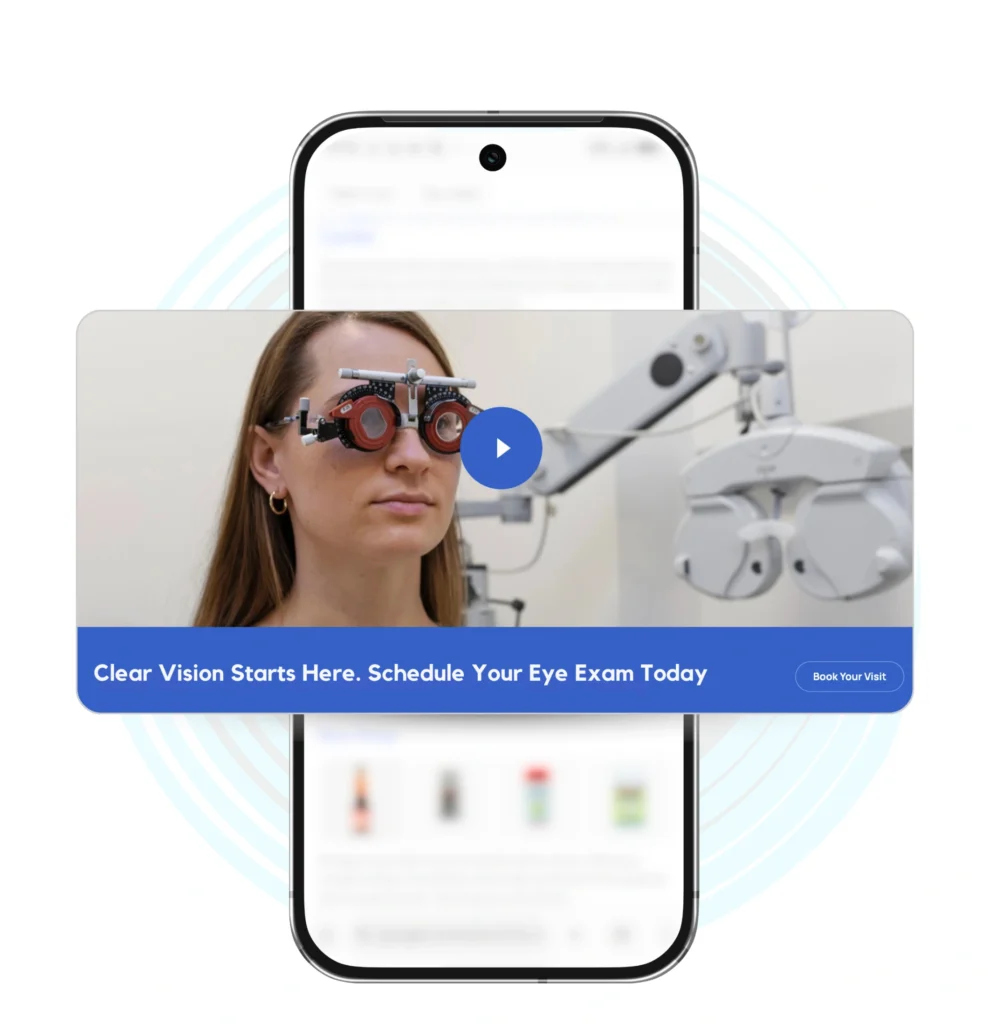
- Make titles that make your viewers click for example “Book Your Consultation” or “Free LASIK Evaluation” buttons at the top of every page, with one-click access on mobile and desktop.
- Use lead forms on your content pages, linked to social ads, to collect contacts instantly and trigger automatic follow-ups.
- Enable instant chatbots or WhatsApp that integrate your patients to get quick answers and book appointments without waiting, addressing the modern consumer’s need for convenience.
Experiments with call-to-actions offer you limited-time discounts, extended payment plans, or complimentary eligibility screenings that drive your customers’ urgency.
2. Mobile-Friendly & Fast-Loading website Design for lasik clinic
Your LASIK clinics must prioritise mobile as over 90% of healthcare interactions now occur via smartphones.
- Responsive mobile-first website design for lasik clinic that ensures easy navigation, readable text, and accessible booking buttons, regardless of device or screen size.

- Optimize site speed sites should load in under three seconds, as each additional second can decrease conversion rates by up to 20%.
- Make your site with more Integrate features for mobile users, such as tap-to-call, map integration for directions, and one-tap appointment scheduling.
- Given India’s rapid telemedicine growth, up to 70% of providers use mobile health apps, and an estimated 80%+ of LASIK research in urban centers occurs on mobile devices
Developing a comprehensive digital foundation, centered around patient trust, clear CTAs, and high-performance mobile UX, is essential for you to attract and convert LASIK patients in 2025’s digital healthcare environment
3. Strengthening local SEO for LASIK clinics
Strengthening local SEO for LASIK clinics make your strategic lasik marketing strategies focused on boosting search visibility particularly in local markets. Local SEO ensures that potential patients are searching for LASIK services nearby, it makes your site potentially visible at your clinic at the top of search engine results, which is crucial for patient acquisition and clinic growth.
3.1 How to do LASIK SEO for Eye Surgeons
Your effective LASIK SEO for eye surgeons begins with optimising the Google Business Profile thoroughly, including listing precise categories such as “Ophthalmologist,” “LASIK Surgeon,” and related specialties. Targeting your local and procedure-specific keywords like “LASIK eye surgery near me” or combining service and city (e.g., “LASIK surgery in Dallas”) helps you to capture high-intent, local search traffic.
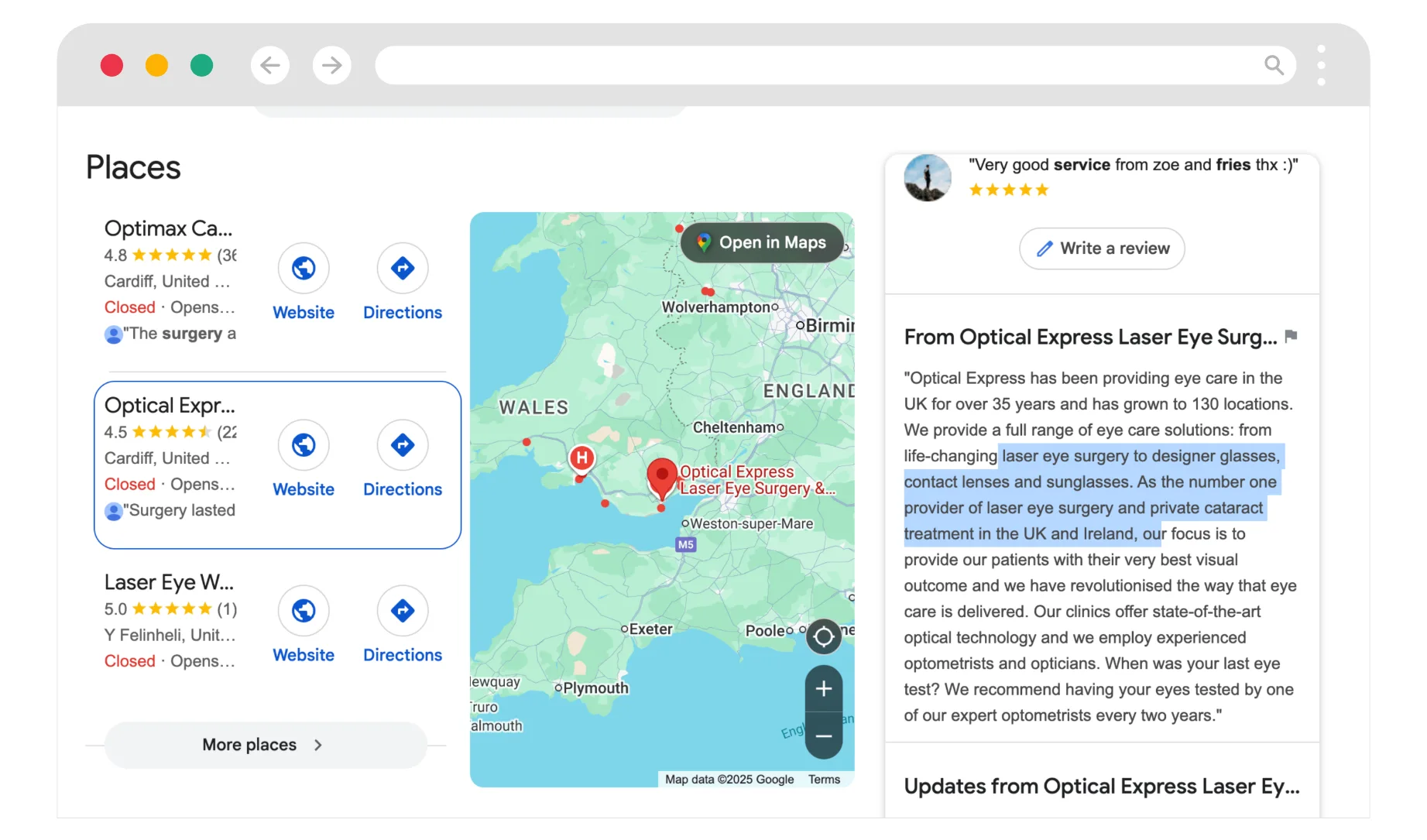
Dedicated service pages optimized for mobile use, rich with FAQs and staff bios, can enhance both user experience and search rankings. If you use review and schema markup that displays star ratings directly in search results, it will increase your site credibility and click-through rates.
These strategies improve your local LASIK visibility and drive conversions by matching the exact language and intent of your local patients actively searching for services
3.2 Create Content for LASIK Clinic SEO
You need high-quality, well-researched content that is vital for your LASIK clinic SEO. Creating informative blog posts, FAQs, videos, infographics, and patient success stories addresses common patient questions such as “Is LASIK safe?” or “How long is recovery after LASIK?”
This content not only educates but also builds trust, which is important as 92% of patients prefer content that helps them understand their treatment options before deciding.
Your content should be tailored to address both top-of-funnel (TOF) and middle-of-funnel (MOF) patient queries, positioning your clinic as a reliable expert. Unique content for each clinic location with surgeon specifics, payment policies, and testimonials.
4. Analysis and Effectiveness of LASIK Digital Marketing Strategies
Local SEO can significantly boost patient inquiries for your clinics. For instance, clinics utilizing local SEO strategies report 35% higher patient inquiries within three months due to increased visibility and trust through verified reviews and optimized local listings.
Additionally, medical websites optimized for local keywords show 45% higher conversion rates, with 62% of local healthcare searches resulting in immediate phone calls.
Despite this, only 3% of doctors prioritize SEO highlighting a major growth opportunity for LASIK clinics through targeted LASIK digital marketing.
If you utilize these LASIK Digital marketing strategies consistently, you can elevate your clinic’s local search presence, improve your patient trust, and ultimately increase new patient bookings significantly.
Use LASIK SEO, LASIK clinic SEO naturally within content and technical SEO efforts that maximize these benefits.
This well-rounded approach ensures the clinic not only attracts attention but converts local searchers into lifelong LASIK patients.
5. LASIK Patient Acquisition Strategy through PPC Paid Ads
LASIK Patient Acquisition Strategy focuses on actively generating your patients through paid ads, high-intent methods , this converts search interest into booked appointments effectively.
These paid ads marketing strategies are designed to optimize LASIK lead generation, LASIK conversions, and guide patients through the LASIK patient funnel efficiently.
5.1 Google Ads for LASIK Growth
One of the core LASIK clinics digital marketing strategies is leveraging a well-structured Google Ads strategy. Google Ads offer immediate visibility by targeting high-intent LASIK treatments keywords that prospective patients use when searching for vision correction services. PPC for ads campaigns benefit from the use of ad extensions, which can boost click-through rates by 10-15% by providing additional links and contact details directly in the ad.
Cost-per-lead ads management optimised spend ensuring clinics get quality leads without overspending;
for eg, some LASIK advertising campaigns see average cost per lead around $75, which can be improved with continuous optimisation. Combining data-driven adjustments with a strategic bid and keyword approach brings efficient LASIK patient acquisition and sizeable practice growth with conversion rate improvements often ranging from 16% to over 40% in consultation increases within 3 months
5.2 Targeting Intent-Driven Search Terms
Successful LASIK marketing strategies depend heavily on how you target high-intent keywords and local intent terms; it should be matched with patient search demand. These keywords reflect an active interest in scheduling or learning about LASIK, such as “best LASIK surgeon near me,” capturing patients ready to convert.
LASIK digital marketing focuses on such targeted terms that ensures higher ad relevance, leading to better quality scores and lower cost-per-click. Local intent terms enhance local LASIK visibility, it captures those patients who prefer nearby clinics, this way it helps you to maximise your appointment booking ads.
5.3 Ad Copy That Converts
Crafting trust-driven ad copy with emotional triggers and clear CTA phrases is a hallmark of effective LASIK digital marketing.
Ad copy that resonates emotionally with patient concerns about safety, outcomes, and benefits can increase your LASIK conversions significantly. Using CTA phrases that encourage immediate action like “Book a Free Consultation” or “See if You Qualify Today” helps to move your patients swiftly down the LASIK patient funnel.
Studies show that incorporating ads originates trust signals in the human mind such as awards, testimonials, or doctor credentials convert better. Ads with strong, persuasive copy and the right keywords get better engagement. This will increase your site’s patient bookings, enhancing both LASIK lead generation and overall campaign ROI.
5.4 Integration of LASIK Marketing Strategies
These focused LASIK marketing strategies with the help of carefully managed Google Ads strategy, intent-driven targeting, and compelling ad copy form.
Your clinics leveraging these approaches can expect you sustainable growth in LASIK conversions, lead quality, and booked appointments, optimizing your advertising budgets and expanding your patient base effectively.
Overall, if you integrate these methods into a comprehensive LASIK digital marketing campaign, it ensures your clinics attract the right patients actively looking for LASIK, increasing both LASIK patient acquisition and practice profitability.
6. Influencer & Referral Marketing for LASIK Clinics
Influencer & Referral Marketing for LASIK Clinics is a powerful LASIK marketing strategy that expands your reach and builds your social proof through trusted voices and patient referrals.
6.1 Influencer Marketing Impact
Research and case studies demonstrate that influencer marketing in ophthalmology, especially for LASIK services, significantly has the potential to boost your brand visibility and increase your consumer engagement.
For example, a campaign by Brand Mender for Raut Eye Care visitors doubled up by advertising through local lifestyle and beauty influencers who shared authentic experiences through engaging videos and reels.
These efforts generated over 25,000 views and substantially increased their online presence and patient inquiries. Influencers sharing personal LASIK journeys helps to demystify the procedure and build trust among their followers, particularly in younger demographics active on platforms like Instagram and TikTok. Influencer content thus serves as a credible referral,
This can enhance your LASIK patient acquisition, if you’re creating relatable and persuasive social proof for LASIK that drives engagement through LASIK influencer marketing
6.2 Referral Marketing Strategies
Patient referral programs use satisfied patients as brand advocates by encouraging them to share their positive experiences with family and friends.
With the help of word-of-mouth and influencers, nearly 92% of healthcare decisions are influenced making a structured referral funnel a powerful way to naturally boost trust and appointment bookings.
LASIK clinics often combine referral marketing with digital marketing strategies, such as email campaigns and after the procedure, you follow up with patients and ask them for testimonials and referrals, which supports your patient loyalty and reputation.
6.3 Social Proof and Authenticity
Your social proof is gained through influencers and patient referral programs, it enhances trust and conversions by providing third-party validation of your clinic’s quality and outcomes.
Authentic content such as video testimonials from influencers and real patients, before-and-after stories, and shared personal journeys, these measures resonate with your new patients at the awareness and consideration stages of the LASIK patient funnel.
6.4 Integrating Influencer and Referral Marketing into LASIK Strategies
Advertisement by influencer and referral marketing into LASIK marketing strategies maximize your reach and trust, it drives you sustainable patient growth through credible and expansive social networks.
This approach effectively complements paid and organic digital efforts for a comprehensive patient acquisition strategy, this ensures your clinics capitalize on micro-influencer promotions, authentic content, and social proof for LASIK to amplify both online visibility and engagement.
7. Patient Reviews & Reputation Management for LASIK Clinics
Patient Reviews & Reputation Management for LASIK Clinics is a critical marketing strategy that strengthens trust and converts into patients and manages LASIK reputation management proactively.
7.1 Importance of LASIK Online Reviews and Reputation Management
LASIK online reviews are among the most influential trust signals for prospective patients, with over 81% of patients familiar with Google reviews improvement and often checking them before choosing a clinic.
Actively managing your LASIK reputation management through regular monitoring and responding to reviews, considering both positives and negatives can boost your clinic reputation score and patient confidence.
Regularly encouraging patient testimonials post-treatment increases your positive review volume, it strengthens your clinic’s credibility online and improves your LASIK patient acquisition.
7.2 Using Patient Testimonials and Review Platforms
If you showcase authentic patient testimonials on the clinic website and social media platforms, this can increase emotional connection and trust among the viewers.
Video testimonials and your patient journey stories resonate strongly, making your outcomes relatable and encouraging appointment bookings. Review platforms such as Google My Business, Healthgrades, and WebMD should be put first in asking for and handling your patient feedback.
Using review management software makes it easier to request and track reviews, keeping your LASIK marketing messages consistent across platforms.
7.3 Building and Maintaining a Strong Clinic Reputation Score
Maintaining a high clinic reputation score requires a multi-pronged approach: regular review monitoring, timely with honest responses to your patient feedback, and transparent handling of any complaints or negative reviews.
Clinics are advised to avoid disclosing specific medical details in public, this measures is made to protect privacy while encouraging direct contact for issue resolution. Consistency in online information across listings, professional tone in engagement, and promoting success stories further elevate your clinic’s overall reputation.
7.4 Incorporating LASIK Reputation Management into Marketing Strategies
Unifining LASIK reputation management into LASIK marketing strategies creates a trustworthy, patient-centered brand image, this is crucial if you want long-term practice growth and patient loyalty.
When you align with other LASIK digital marketing efforts, complete the patient acquisition funnel by converting trust into booked appointments and lasting patient relationships. Prioritizing patient testimonials is equally important that leverage review platforms, and focusing on trust signals ensures your clinics to maintain a strong clinic reputation score.
FAQs
Why is the Cost-Per-Click (CPC) for LASIK keywords so high, and is it still worth the investment?
At idigitaldoctor, we believe PPC is worth it only if you have a high-converting landing page. To maximize ROI, we recommend moving away from “Schedule a Call” buttons and instead using interactive LASIK candidacy quizzes. These capture high-intent leads at a lower friction point, significantly dropping your cost-per-acquisition (CPA).
How can a LASIK practice rank #1 on Google for “LASIK near me”?
1. Google Business Profile Optimization: Frequent updates, high-quality photos of the clinic, and a steady stream of 5-star reviews.
2. Hyper-Local Content: Instead of generic LASIK blogs, write about “LASIK Recovery in [City Name]” or “Why [Local Landmark] looks better after LASIK.”
3. Schema Markup: Use “MedicalBusiness” and “Surgeon” schema so Google’s AI understands your specific location, hours, and services. This tells Google you aren’t just a website; you are a physical authority in your specific geographic area.
Does “Social Media Marketing” actually work for surgical procedures like LASIK?
Surgeon Reels: Short videos of the doctor explaining the safety tech.
The “Wow” Moment: Video testimonials of patients seeing the clock on the wall immediately after surgery.
UGC (User-Generated Content): Reposting patient stories about their first day without glasses. Social media acts as a “nurture” engine that shortens the typical 3–6 month consideration cycle for LASIK.
What is the “Zero-Volume” keyword strategy for LASIK marketing?
How do we track the “Return on Ad Spend” (ROAS) when patients take months to decide?
We use Multi-Touch Attribution models that track the entire patient journey. Instead of just looking at “last-click” conversions, we measure “Micro-Conversions” like:
Downloads of a LASIK pricing guide.
Completion of a candidacy quiz.
Email newsletter sign-ups. This gives a 360-degree view of your marketing performance and ensures you aren’t cutting budgets on channels that are actually driving the initial interest.
How do we market “SMILE” or “ICL” without cannibalizing our LASIK volume?
What is the best way to reduce “No-Shows” for free LASIK consultations?
Immediate SMS: A text sent within 2 minutes of the form submission.
The “Surgeon Intro” Email: A video email from the doctor welcoming them.
Value-Add Reminders: Instead of “See you tomorrow,” send “3 things to do before your consult.” We’ve found that practices using an integrated CRM (like MDprospects or similar) to automate these “touches” see a 30% increase in consultation attendance.