

Expert SEO Services for Cardiologist Practices That Rank on Google and Fill Your OPD
Over 17,000 patients search “cardiologist near me” every month in India alone — and 60% of all cardiac searches happen on mobile. iDigital Doctor delivers specialist SEO services for cardiologist practices — cardiac procedure keyword ranking, Google Maps 3-Pack domination, E-E-A-T YMYL content, and local authority building designed exclusively for cardiology. No generic templates. No healthcare generalism.



Get Your Free Practice Growth Audit
Why Most Cardiologists Are Invisible on Google Even With a Strong Clinical Reputation
Clinical excellence does not automatically translate to online visibility. The cardiologists ranking on page 1 in your city are not always the best clinicians — they are the ones who have invested in cardiology-specific SEO. Here is exactly what is costing you patients, every day.
When patients in your city search “cardiologist near me,” “best heart specialist [city]” or “angioplasty cost India,” they are finding your competitors. Every day you are not on page 1 for these searches, you are handing those patients to practices that may be clinically inferior but digitally superior.
Over 60% of clicks on local cardiac searches go to the Google Maps 3-Pack — the three practices shown at the very top of results. If your cardiology practice is not in that 3-Pack for your city’s cardiac keywords, you are invisible to the majority of local patients who will never scroll further.
Google’s YMYL algorithm applies its strictest E-E-A-T standards to cardiac medical content. Generic blog posts, AI-generated procedure descriptions and non-clinical content on your cardiology website are not just failing to rank — they are actively signalling low authority to Google and suppressing your existing pages.
Patients searching “angioplasty surgeon Mumbai,” “interventional cardiologist near me” or “cardiac ablation specialist Delhi” are your highest-converting leads — procedure-specific, high-intent, ready to book. Without dedicated subspecialty landing pages, these patients land nowhere on your site and leave immediately.
17K+
Monthly searches for “cardiologist near me” in India — and 60% of all cardiac searches happen on mobile devices.
Source: Google Trends India, 2025
75%
of users never scroll past page 1 of Google search results — meaning if you are not on page 1 for cardiac keywords in your city, you effectively do not exist online.
Source: Backlinko, 2025
60%
clicks on local searches go to the Google Maps 3-Pack. If your cardiology practice is not in position 1, 2 or 3 on Maps for your city’s cardiac keywords, you are losing the majority of local cardiac search traffic.
Source: BrightLocal, 2025
Complete SEO Services for Cardiologist Practices — Every Layer That Drives Cardiac Search Visibility
Every SEO component we build is calibrated specifically to the cardiac patient search journey — from the moment a patient first Googles a heart symptom to the moment they book an OPD appointment. No generic templates. No plug-and-play packages. Cardiology SEO built from the ground up.

Google Maps 3-Pack Domination for Cardiac Searches
Rank in positions 1, 2 or 3 on Google Maps for every high-value cardiac local keyword in your city — the single highest-volume, highest-conversion SEO channel for any cardiologist.
Web Vitals & Technical Foundation for YMYL Cardiac Sites
The invisible technical layer that determines whether Google considers your cardiac website trustworthy enough to rank, especially under YMYL’s stricter algorithmic evaluation for medical content.
Landing Pages That Rank and Convert
Dedicated, keyword-optimised landing pages for each cardiac subspecialty and procedure — the highest-converting SEO assets for any cardiology practice and the content gap virtually every competitor has missed.
Cardiac Authority Content That Google Ranks and Patients Trust
Monthly medically accurate cardiac content that satisfies Google’s YMYL E-E-A-T standards and the deep research behaviour of cardiac patients before making OPD appointment decisions.
Procedure-Level Cardiac Keyword Architecture
A granular keyword map covering all four cardiac intent tiers: emergency, local, procedure-specific, and informational, each mapped to a specific page type and a specific OPD conversion goal.
Medically Credible Backlink Building for Cardiac Authority
High-quality backlinks from medically relevant Indian sources — healthcare publications, hospital directories, cardiology association pages — that build the domain authority signals Google requires before ranking YMYL cardiac content.
Review the Velocity Strategy That Drives Both Maps Rankings and Patient Trust
Google Maps rankings for cardiac searches are directly influenced by review volume, recency, and star rating. 84% of cardiac patients check reviews before booking. We build both simultaneously — more reviews, higher ratings, better Maps rankings.
Monthly Cardiac SEO Reports Tied to OPD Enquiries — Not Vanity Metrics
FAQ-first content structure optimised for Google AI Overviews and ChatGPT/Gemini citations. Entity markup communicates your clinic, doctors, and procedures as verifiable entities to AI systems. AI citation monitoring — tracking whether your clinic appears in AI-generated answers for key queries in your market. 75% of dental searches now have AI Overviews above organic results.
Generative Engine Optimisation for Cardiac AI Search Visibility
26% of patients now choose healthcare providers via AI tools like ChatGPT and Google AI Overviews. Cardiologists who structure their content with clear factual authority signals, cited credentials and verifiable cardiac data are significantly more likely to be surfaced as recommendations.Our process
Our core services — fully broken downWhy SEO for Cardiologist Practices Demands a Healthcare-Exclusive Agency — Not a Generalist
Cardiology SEO is not general SEO with medical words inserted. The YMYL compliance requirements, the dual emergency/planned-care search intent, the sub-specialty depth, and the MCI advertising constraints create a domain that generic SEO agencies consistently get wrong — costing you rankings, compliance standing, and patients.
1
Cardiac Content Is YMYL — Google’s Strictest Content Standard
Every page on a cardiologist’s website is classified by Google as YMYL (Your Money, Your Life) content — meaning it is evaluated under the strictest version of Google’s E-E-A-T (Experience, Expertise, Authoritativeness, Trustworthiness) framework. A blog post about “angioplasty recovery tips” written by a generic content writer will actively suppress your cardiac SEO rankings, not build them. Google’s algorithm checks for physician authorship signals, medical references, procedure schema markup, and hospital affiliation data before deciding whether cardiac content deserves to rank.
2
Cardiology Requires a Three-Tier Keyword Strategy — Not a Single Keyword List
Effective SEO for cardiologists operates across three distinct keyword tiers simultaneously: emergency-intent keywords capturing acute cardiac patients (“chest pain hospital near me”), local-intent keywords capturing planned-care seekers (“best cardiologist Delhi”), and procedure-specific keywords capturing the highest-converting cardiac searches (“angioplasty cost India,” “PTCA specialist Mumbai”). Each tier requires different page types, different content depth, different schema markup, and different internal linking architecture. Generic agencies build one keyword list and one page template for all three.
3
Google Maps 3-Pack SEO for Cardiology Is Its Own Distinct Discipline
Ranking in the Google Maps 3-Pack for cardiac local searches — “cardiologist near me,” “heart specialist [city]” — is not the same as ranking organically. It requires Google Business Profile optimisation specifically for cardiology categories, NAP consistency across 50+ Indian medical directories including Practo and JustDial, review velocity strategy that builds social proof ethically, and proximity-distance optimisation unique to the multi-location realities of Indian cardiac hospitals. Over 60% of clicks on local cardiac searches go to the 3-Pack — making this the single highest-value SEO activity for any cardiologist.
4
Cardiac Subspecialty SEO Is an Untapped Gold Mine That Almost No Cardiologist Has Claimed
While every cardiologist fights for the generic “cardiologist [city]” keyword, the subspecialty keywords — “interventional cardiologist Delhi,” “cardiac electrophysiologist Bengaluru,” “preventive cardiology specialist Mumbai” — have dramatically lower competition and dramatically higher intent. A patient searching for an “electrophysiologist for AFib treatment” in your city is not researching options — they are ready to book. Yet almost no cardiology practice has a dedicated page for these subspecialty searches, which means ranking for them is a realistic 60–90 day SEO goal in most Indian cities.
5
Technical SEO for Cardiology Websites Has Higher Stakes Than Other Specialties
A cardiac patient accessing your website with chest symptoms cannot wait for a slow-loading page. Website speed is not just an SEO ranking factor for cardiology practices — it is a patient care issue. Google’s Core Web Vitals threshold for healthcare YMYL pages is evaluated more critically because slow, poorly optimised cardiac content signals an untrustworthy practice. Additionally, cardiac websites frequently fail structured data requirements — lacking MedicalClinic, Physician, and Procedure schema markup — leaving hundreds of potential rich snippet appearances unclaimed in Google search results.
6
MCI Advertising Compliance Is a Mandatory Constraint in Cardiology SEO Content
Every SEO content piece published on a cardiologist’s website — blog posts, procedure pages, GBP posts, FAQ content — must comply with MCI (Medical Council of India) advertising guidelines. Outcome claims in cardiac content (“successful angioplasty,” “best survival rate,” “guaranteed recovery”) frequently violate MCI rules that prohibit exaggerated or unverified medical claims. Generic SEO agencies write this content without ever having read an MCI guideline. The compliance risk falls entirely on your medical licence and NABH accreditation.
Real Result, Case Studies
See our verified success stories: proven digital strategies driving real patient growth for healthcare practices.

Ayurvedic Clinic Achieves Professional Digital Credibility with Content and Brand Strategy
55%
40%
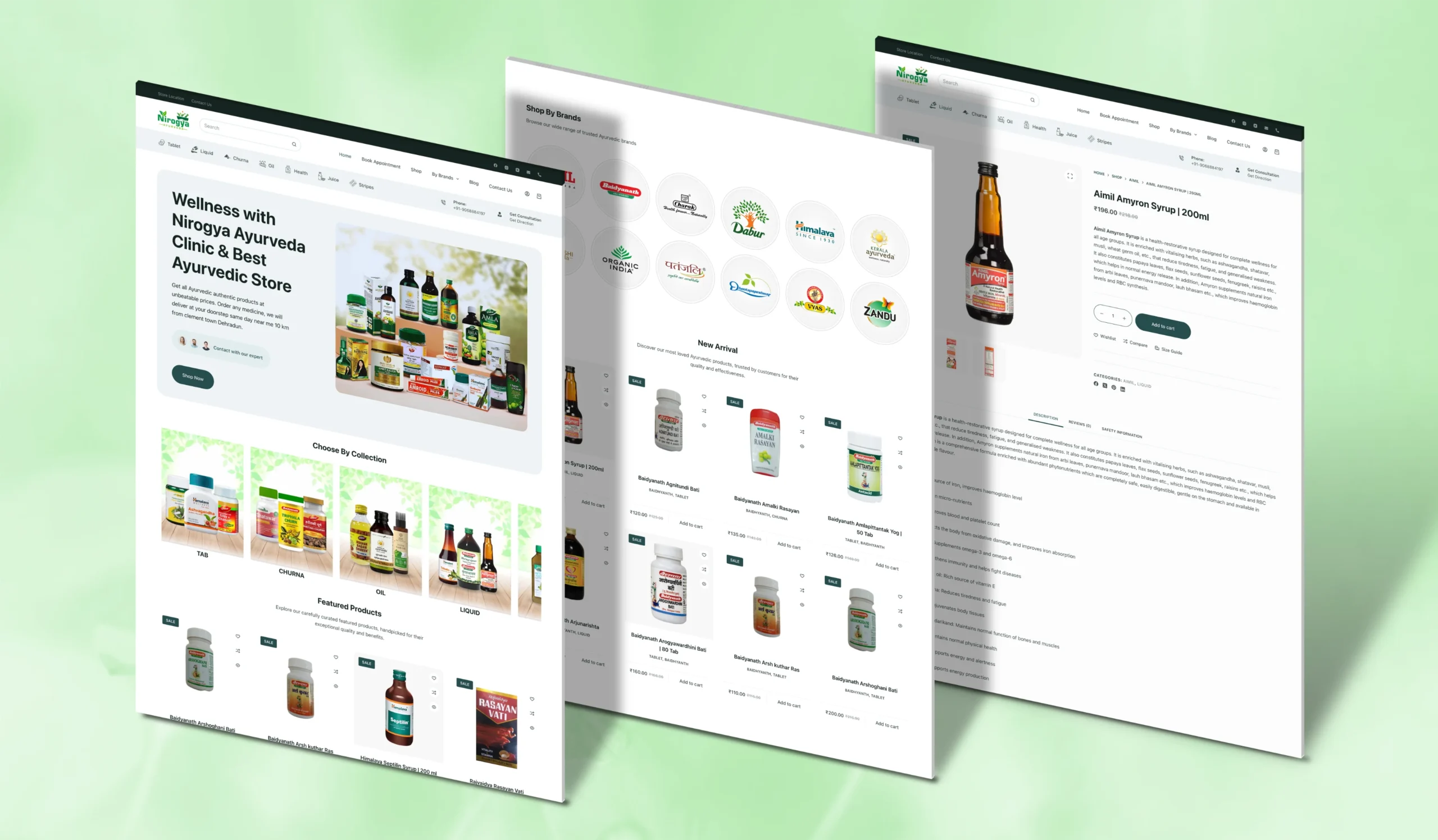
Building a Dual-Market Ayurveda Store for Traffic and Sales
75%
3X
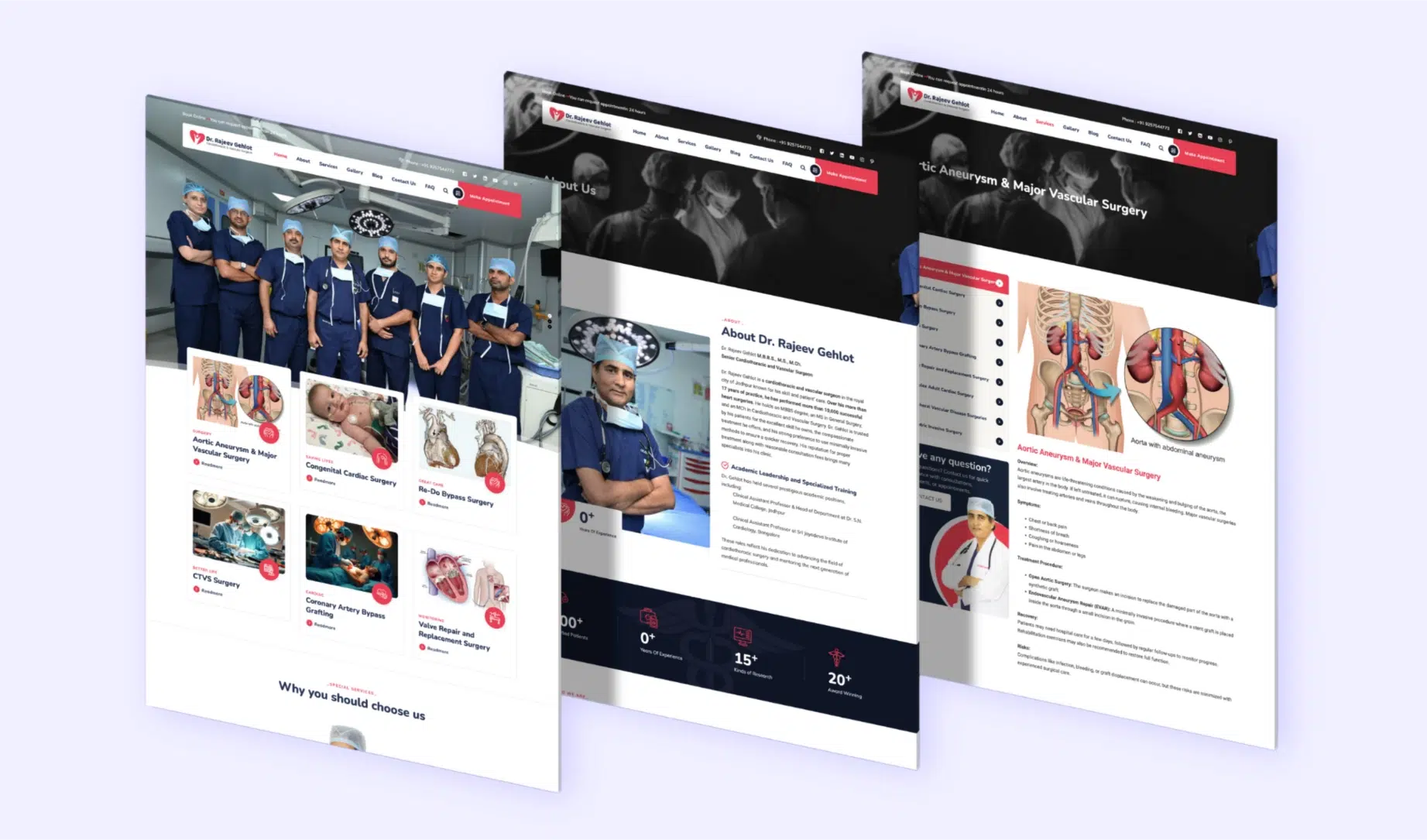
3-Step Digital Authority Launch for a Leading Cardiology Specialist.
3X
15+
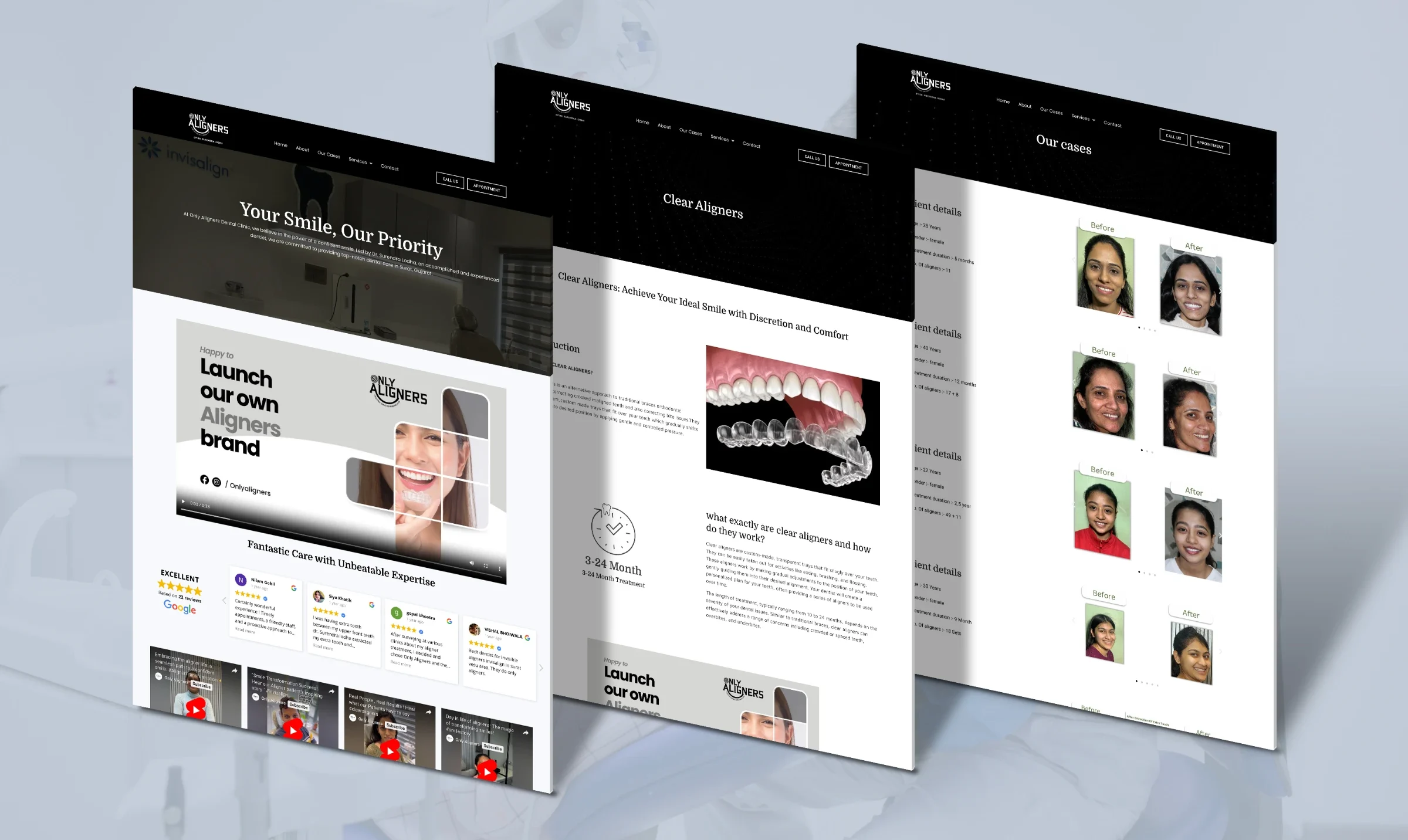
Orthodontic Provider Increases Leads by 26% Through Digital Foundation
26%
300%
How iDigital Doctor Delivers SEO for Cardiologist Practices — Phase by Phase
Every cardiology SEO engagement follows a structured, six-phase methodology that moves from forensic audit to compounding organic authority — with MCI compliance built into every phase, not added as an afterthought.
Get a Free ConsultationOur process
Why Choose iDigital DoctoriDigital Doctor Cardiology SEO vs. Generic SEO Agency
The difference between an agency that does SEO for cardiologists and an agency built exclusively for healthcare is the difference between a strategy that ranks and one that wastes six months of your budget.
Generic SEO Agency
Multi-industry — healthcare is just another vertical
iDigital Doctor: Cardiology SEO Agency
Focus: Get your first content assets live and social media operational
What’s Our Client Say
Their team designed a clean, modern, and highly professional website for our clinic that truly reflects our brand. UI, and patient-focused layout have significantly improved our online presence. We are now able to present our aligner solutions with clarity and credibility. Highly recommended for healthcare branding and development.

We partnered with iDigital Doctor for website development and Google My Business SEO. Their team optimized our local presence, improved our rankings, and made our hospital more visible to patients searching online. The results were practical and measurable. They understand healthcare marketing deeply.

When we decided to improve our online presence, we wanted something simple, clean, and informative for our patients. The website now clearly explains our Ayurvedic treatments, and patients often mention they found us easily on Google. We’ve definitely seen more inquiries coming in. Overall, a smooth and professional experience.

As a cardiologist, I wanted a website that reflects professionalism and builds trust with patients even before they visit the hospital. The final design is clean, informative, and easy to navigate. Patients can now quickly understand our cardiac services and book appointments without confusion. very satisfied

Questions About SEO Services for Cardiologist Practices — Answered
The SEO questions cardiologists ask most before committing — answered with data, without jargon, and without generic answers copied from non-cardiac marketing content.
What is SEO for cardiologists and how is it different from general medical SEO?
SEO for cardiologists is the process of optimising your cardiology practice’s website, Google Business Profile, and content to rank on page 1 of Google for the cardiac keywords your patients actively search — from “cardiologist near me” to procedure-specific queries like “angioplasty cost Mumbai” or “interventional cardiologist Delhi.” It differs from general medical SEO because: (1) cardiac content falls under Google’s YMYL (Your Money, Your Life) category, requiring verified E-E-A-T authority signals that generic SEO agencies don’t know how to build, (2) cardiology requires a three-tier keyword strategy covering emergency, local and procedure-specific searches, and (3) MCI compliance constraints govern what can and cannot be written in cardiac content — constraints that non-healthcare SEO agencies routinely violate, putting your medical licence at risk.
How long does cardiologist SEO take to show results in India?
Google Business Profile and Google Maps improvements are typically visible within 30–60 days of GBP optimisation and review strategy activation. Organic rankings for cardiac procedure keywords in Tier 2 cities (Jaipur, Indore, Nagpur, Lucknow) often appear within 3–4 months. Competitive metro cardiac keywords like “best cardiologist Mumbai” or “interventional cardiologist Delhi” take 5–8 months of consistent SEO work. iDigital Doctor combines cardiology SEO with Google Ads so you receive qualified cardiac OPD leads within 48 hours of campaign launch while organic authority builds in the background — you never wait solely on SEO for results.
What cardiac keywords should a cardiologist target for SEO?
Effective cardiologist SEO targets four keyword tiers: Emergency intent (“chest pain hospital near me,” “cardiac emergency [city]”) — highest urgency, requires immediate-access landing pages. Local intent (“cardiologist near me,” “best heart specialist [city]”) — highest volume, driven by Google Maps 3-Pack. Procedure-specific intent (“angioplasty cost India,” “PTCA specialist Mumbai,” “echocardiogram near me”) — highest conversion rate, requires dedicated procedure landing pages. Informational intent (“when to see a cardiologist,” “signs of heart disease”) — top of funnel, builds long-term trust and drives blog traffic that converts via remarketing. iDigital Doctor maps all four tiers to specific pages, content types and conversion goals — not just a flat keyword list.
What is E-E-A-T and why does it matter for cardiologist SEO?
E-E-A-T stands for Experience, Expertise, Authoritativeness, and Trustworthiness — Google’s content quality framework that it applies most rigorously to YMYL (Your Money, Your Life) content, which includes all medical and cardiac information. For cardiologist SEO, E-E-A-T means every page must demonstrate verified clinical authority: physician-authored content with DM Cardiology or FACC credentials cited, hospital affiliation signals, procedure schema markup, medical references and citations, and clear patient safety information. Generic content written by non-clinical writers — including AI-generated content — actively suppresses your cardiac SEO rankings under YMYL evaluation. iDigital Doctor builds E-E-A-T signals into every piece of cardiac SEO content as the baseline, not a premium addition.
How much does SEO for a cardiologist cost in India — and what is the ROI?
iDigital Doctor’s cardiologist SEO packages start from ₹15,000/month for solo cardiologists (local SEO, GBP management, 3–5 target procedure keywords) and range to ₹60,000+/month for comprehensive cardiology SEO covering technical optimisation, all subspecialty landing pages, monthly E-E-A-T content, link building, review strategy and full OPD-linked reporting. The ROI calculation for cardiology is compelling: one additional angioplasty attributed to organic SEO generates ₹80,000–₹3,00,000 in procedure revenue. One additional cardiac screening package from a blog ranking generates ₹5,000–₹15,000. Most cardiology clients achieve full monthly SEO cost recovery from 1–2 additional procedure-level OPD referrals per month from organic search — within the first 4–6 months of SEO authority building.
What is Google Maps SEO for cardiologists and why is it critical?
Google Maps SEO (also called Local SEO or Google Business Profile optimisation) is the process of ranking your cardiology practice in the Google Maps 3-Pack — the three practices shown at the top of Google search results for local cardiac queries like “cardiologist near me” or “heart specialist [city].” The 3-Pack captures over 60% of all clicks on these local cardiac searches. Being in position 1, 2 or 3 on Google Maps for your city’s cardiac keywords can realistically generate 15–40 additional OPD enquiries per month for an established cardiology practice. iDigital Doctor’s cardiology Maps SEO includes GBP optimisation in cardiology-specific categories, weekly posts, Q&A seeding, photo strategy, review velocity programme, and NAP consistency across 50+ Indian medical directories — the complete 3-Pack domination system.
Can you do SEO for a cardiology department within a multi-specialty hospital?
Yes — this is one of our most common cardiology SEO engagements. We build department-specific SEO strategies for cardiology units within multi-specialty hospitals: dedicated cardiac section pages or microsites targeting cardiac-only keywords, individual subspecialty landing pages for interventional cardiology and electrophysiology, cardiac-specific schema markup on all department pages, and a separate GBP optimisation strategy for the cardiology department’s listing — without affecting the hospital’s existing domain authority, other department pages or overall SEO performance. The cardiology department receives a fully independent SEO growth strategy within the hospital’s broader digital ecosystem.
