
Most orthopedic clinics in India still operate under the assumption that referrals and word-of-mouth will sustain patient volume. That approach worked when competition was limited and digital behaviour was different. The reality now is that patients search online before they make decisions about surgery, consultations, or even basic physiotherapy. Clinics that do not appear in local search results are losing patients to competitors who do.
Local SEO for orthopedic practices is not about applying generic digital marketing tactics. The search behaviour of someone looking for joint replacement surgery differs completely from someone searching for a general physician. The intent is specific, the urgency varies, and the decision-making process involves research, comparison, and trust-building before contact is made. Clinics need visibility at the exact moment a patient is searching for treatment in their area.
Google Business Profile as the Primary Visibility Tool
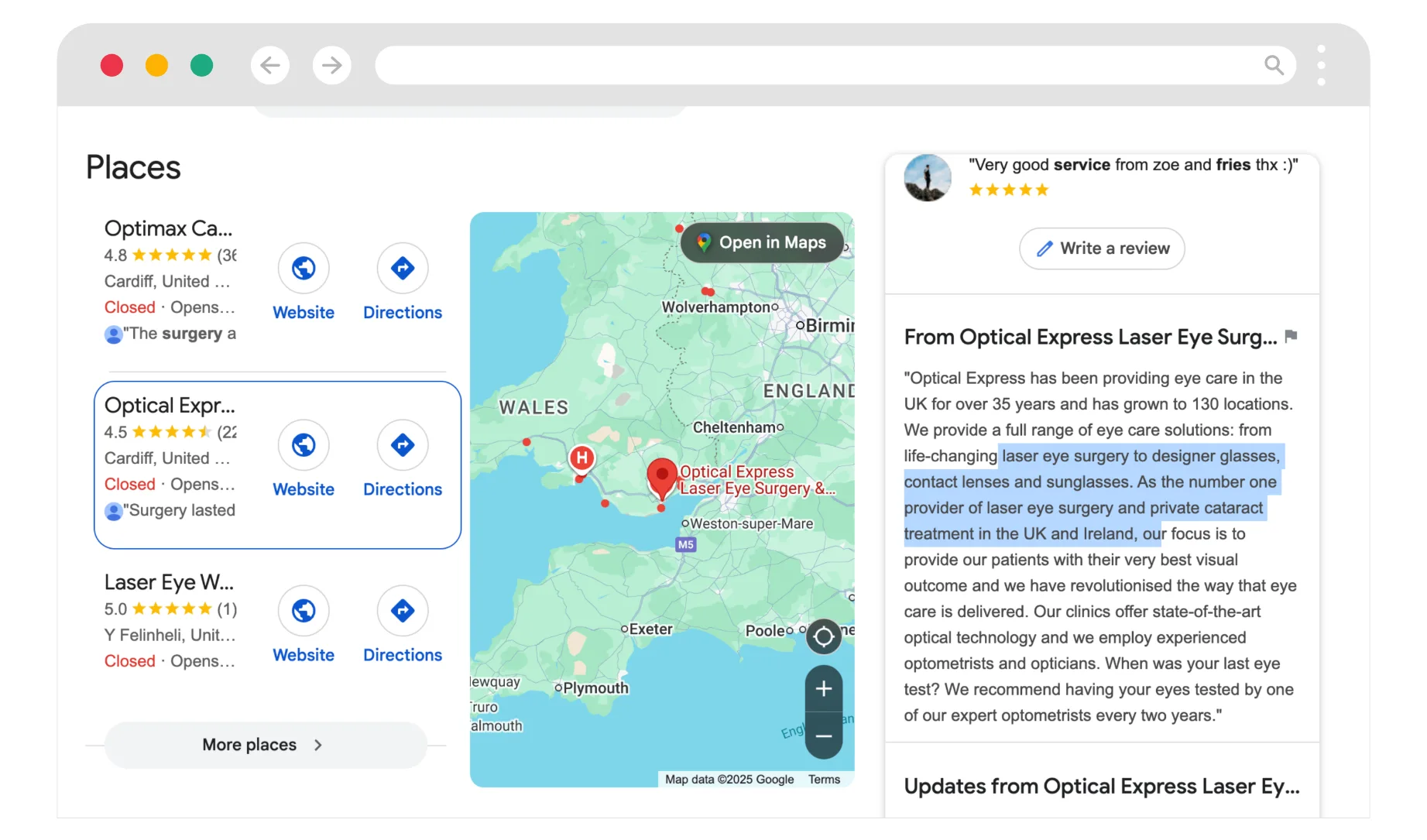
The Google Business Profile remains the most direct method for orthopedic clinics to appear in local search results. When someone in Pune searches “knee replacement surgeon near me” or “orthopedic doctor in Koramangala,” Google prioritises profiles that are complete, accurate, and actively maintained.
Many clinics create a profile and leave it untouched. That leads to outdated hours, missing service categories, incorrect phone numbers, and incomplete descriptions. Patients abandon these listings because they cannot verify if the clinic is operational or relevant to their needs.
Profiles should include every service the clinic provides: joint replacement, sports injury treatment, spine surgery, arthroscopy, fracture care. Categories must be selected carefully. Choosing “Medical Clinic” instead of “Orthopedic Clinic” or “Orthopedic Surgeon” reduces relevance in search results. The business description should clarify specialisations, not repeat generic statements about patient care.
Photos matter more than most clinics assume. Patients want to see the facility, consultation rooms, operating theatres, if applicable, and staff. Profiles with recent, high-quality images perform better than those with stock photos or no visuals at all. Uploading images regularly signals that the profile is maintained.
Regular posts on the profile(such as updates about new treatments, changes in consultation schedules, or health advisories)keep the listing active. Google favours profiles that show consistent engagement.
Understanding How Orthopedic Patients Search Locally
Search behaviour in orthopedics is driven by pain, mobility issues, or injury. Patients rarely search for “orthopedic clinic” alone. They search with specificity: “best doctor for shoulder pain in Jaipur,” “ACL surgery specialist Mumbai,” “hip replacement surgeon Hyderabad.”
The combination of condition, treatment, and location defines intent. Clinics that optimise only for broad terms miss the majority of search traffic. A patient searching “knee pain doctor near me” is further along in the decision process than someone searching “causes of knee pain.” The former is looking for an appointment. The latter is still gathering information.
Local modifiers appear in nearly every search. Patients add neighbourhood names, landmarks, or metro stations. “Orthopedic clinic near Indiranagar,” “bone doctor in Whitefield,” or “sports injury treatment Bandra” are all common patterns. Clinics must align their website content and profile information with how people actually search in their city.
Urgency also plays a role. Fractures, severe pain, and post-accident injuries generate immediate searches. Elective procedures like joint replacement or corrective surgery involve longer research periods. Content and targeting should address both.
Structuring Service Pages with Local Relevance
Service pages on clinic websites often fail because they are written generically. A page titled “Knee Replacement” that describes the procedure without any local context or specific details about the clinic’s approach does not perform well in local search.
Each service page should specify the treatment, the conditions it addresses, and the clinic’s location. Instead of “Knee Replacement Surgery,” a better approach is “Knee Replacement Surgery in Bangalore – Advanced Joint Care.” The page should explain what the clinic offers, the techniques used, recovery protocols, and why patients in that area should consider the practice.
Service pages must also answer the questions patients are asking. What is the recovery time? What are the risks? What is the cost range? How many procedures has the surgeon performed? Clinics that avoid these questions lose credibility.
Including the surgeon’s qualifications, experience, and specialisation on service pages builds trust. Patients want to know who will perform the surgery, not just what the surgery involves.
Location-Based Content That Matches Search Intent
Clinics with multiple branches or those serving patients from surrounding areas need location-specific content. A single homepage cannot rank for every neighbourhood or city the clinic serves.
Creating dedicated location pages helps. These should not be duplicate content with only the city name changed. Each page should address why patients in that area choose the clinic, accessibility details, nearby landmarks, parking availability, and any area-specific services.
For example, a clinic in Delhi with branches in Dwarka and Rohini should have separate pages for each location. The Dwarka page might mention proximity to the metro, availability of weekend consultations, or partnerships with local diagnostic centres. The Rohini page would highlight different details relevant to that area.
Blog content also supports local SEO when it addresses region-specific concerns. Writing about monsoon-related joint pain in Mumbai, winter stiffness in North Indian cities, or sports injuries common among patients in areas with active sports culture makes content relevant and searchable.
Managing Reviews and Reputation at the Local Level

Patient reviews directly influence local search rankings and patient decisions. Google prioritises profiles with recent, positive reviews. Clinics that actively request reviews from satisfied patients see better visibility than those with few or outdated reviews.
The process should be simple. After a successful consultation or surgery, clinic staff should send a follow-up message with a direct link to leave a review. Many patients are willing to share their experience but will not do so unless prompted.
Negative reviews will happen. Ignoring them damages credibility. Responding professionally, acknowledging the concern, and offering to resolve the issue privately demonstrates accountability. Potential patients read how clinics handle complaints as much as they read the complaints themselves.
Review volume and consistency matter. A clinic with 200 reviews from the past year ranks better than one with 50 reviews from three years ago. Encouraging reviews should be part of standard patient follow-up procedures.
Mobile Performance and Site Usability
Most patients search for orthopedic clinics on mobile devices. A website that loads slowly, has small text, or requires excessive scrolling will lose patients before they reach the contact form.
Mobile usability is not about design aesthetics. It is about function. Can patients find the phone number immediately? Can they book an appointment without navigating through multiple pages? Is the location map embedded and functional? These details determine whether a visitor converts into a patient.
Page speed also affects rankings. Google penalises slow-loading websites in mobile search results. Clinics do not need complex websites. They need fast, clear, and accessible ones.
Contact information should be visible on every page. Patients should not have to search for a phone number or appointment link. Click-to-call buttons, WhatsApp integration, and appointment forms above the fold improve conversion rates.
Healthcare Directories and Local Citations
Local citations (mentions of the clinic’s name, address, and phone number on other websites)help search engines verify business information. Inconsistent citations confuse search algorithms and weaken local rankings.
Clinics should ensure their details are accurate across healthcare directories, hospital listings, medical portals, and general business directories. Practo, Lybrate, JustDial, and city-specific healthcare platforms are common citation sources in India.
Each listing should be claimed and updated. Unclaimed profiles often contain outdated or incorrect information submitted by third parties. Claiming them allows clinics to control what patients see.
Healthcare-specific directories carry more weight than general directories. A listing on a medical platform signals relevance to search engines in ways a generic business directory does not.
Building Local Backlinks Through Healthcare Partnerships
Backlinks from locally relevant websites strengthen domain authority and local search performance. Orthopedic clinics can build these through partnerships, sponsorships, and professional affiliations.
Local hospitals, diagnostic centres, physiotherapy clinics, and sports academies are natural partners. A backlink from a hospital where the surgeon operates or a physiotherapy centre that refers post-surgery patients adds credibility.
Sponsoring local sports events, health camps, or community programmes generates backlinks from event websites, news coverage, and partner organisations. These links are geographically relevant and contextually appropriate.
Writing guest articles for healthcare blogs, contributing to local health magazines, or being featured in news stories about medical advancements also creates backlink opportunities. The goal is not volume but relevance.
Professional associations, medical boards, and surgeon registries often list member profiles with website links. Ensuring the clinic is listed in these directories provides both citations and backlinks.
Local SEO for orthopedic clinics is not a one-time setup. Search behaviour changes, competition increases, and patient expectations evolve. Clinics that treat local visibility as an ongoing operational priority rather than a marketing afterthought will continue to attract patients while others struggle with declining appointment volumes.