
A patient who woke up this morning unable to remember her daughter’s name is searching for a neurologist right now. Is your practice showing up? And when she finds you, does your website make her feel safe enough to call?”
Neurology is one of the most search-driven medical specialties in existence. Patients and families dealing with migraines, epilepsy, Parkinson’s disease, multiple sclerosis, stroke recovery, or dementia spend days — sometimes weeks — researching online before they ever contact a clinic. They are frightened, overwhelmed, and looking for a combination of clinical excellence and human warmth that most neurology practice websites simply do not communicate.
At the same time, the marketing playbooks written for neurologists are almost universally generic. They recommend “post on social media,” “do SEO,” and “run Google Ads” — advice so vague it could apply to a pizza restaurant. None of them address what is genuinely different about marketing a neurology practice: the role of physician referrals, the need to market to caregivers rather than patients, the condition-specific content strategy, or the long patient decision cycle.
This guide addresses all of it. What follows is a complete, phase-by-phase marketing plan for neurologists — structured to be executed, not just read.
Why Neurology Marketing Is Genuinely Different
Three things make marketing a neurology practice fundamentally different from any other specialty:
-
The caregiver factor:
A significant proportion of neurology appointments are researched and booked by family members — spouses of stroke patients, children of dementia patients, parents of children with epilepsy. Your marketing must speak to the caregiver, not just the patient.
-
The fear factor:
Patients searching for neurological care are often terrified. A brain scan, a suspected seizure, sudden memory loss — these searches come from people in crisis. Your marketing tone must balance clinical authority with genuine human warmth
-
The referral dependency:
Unlike most specialties, neurology practices rely heavily on physician referrals from GPs, cardiologists, and internists. A marketing plan that ignores referral network development will always underperform
Know Your Patient — Building Neurology-Specific Personas
Before any channel, campaign, or content piece, you need absolute clarity on who you are marketing to. Neurology practices serve radically different patient populations — and each requires a completely different marketing approach.
Most neurology marketing advice treats “the neurology patient” as a single entity. This is a fundamental error. A 28-year-old migraine sufferer behaves nothing like a 72-year-old Parkinson’s patient’s spouse. Their search behaviour, platform preferences, emotional state, and decision triggers are entirely different. Marketing to both with the same message is why so many neurology practice campaigns underperform.
The Five Core Neurology Patient Personas
| Persona | Who They Are | How They Search | What Wins Them | Primary Channel |
|---|---|---|---|---|
| The Migraine Sufferer | 25–45, often female, chronic condition, frustrated with previous treatment | “neurologist for migraines,” “migraine specialist near me” | Understanding of their specific condition, treatment options beyond basic medication, quick appointment access | Google Search + Blog |
| The Caregiver / Family Member | Adult children or spouses of dementia, Parkinson’s, or stroke patients — researching on behalf of a loved one | “neurologist for dementia,” “Parkinson’s specialist,” “stroke recovery doctor” | Compassionate tone, clear explanation of what care involves, reassurance that their loved one will be treated with dignity | Google + Facebook |
| The Newly Diagnosed Patient | Recently diagnosed with MS, epilepsy, or another chronic condition — scared, information-seeking | Condition-specific searches: “what is MS,” “epilepsy treatment options,” “neurologist for epilepsy” | Condition-specific searches: “what is MS,” “epilepsy treatment options,” “neurologist for epilepsy.” | Blog + YouTube |
| The Referred Patient | Sent by their GP or specialist — looking up your practice before their appointment | Your name directly, your practice name, “reviews of [practice name]” | Professional website, strong Google reviews, clear doctor biography, easy booking confirmation | Google Reviews + Website |
| The Self-Referral / Symptom Searcher | Experiencing unexplained symptoms — headaches, numbness, memory issues, balance problems | Symptom-first: “why do I keep getting headaches,” “numbness in hands,” “memory loss causes” | Educational symptom content that guides them toward booking a consultation without creating panic | Blog + GBP |
-
YOUR ACTION STEP — DO THIS TODAY
Look at your last 20 new patient enquiries. Which persona type were they? Which ones converted to appointments and which didn’t? This 10-minute exercise will immediately show you where your marketing is working and where patients are slipping through the gap.
Physician Referral Marketing — The Channel Every Competitor Ignores
For most neurology practices, 50–70% of new patients come from physician referrals. Yet almost no marketing guide for neurologists addresses how to build and maintain a referral network. This is your biggest competitive advantage — and most practices leave it entirely to chance.
Unlike direct-to-consumer marketing — where a patient finds you through Google, evaluates your website, and books an appointment — referral marketing operates on a completely different dynamic. A GP who trusts you sends patients to you consistently, without you spending a rupee on advertising. One solid referral relationship with a busy GP can send you 5–10 patients per month, every month, for years.
The problem is that most neurologists build referral relationships through informal social contact — running into a GP at a conference, sharing a hospital corridor — rather than through a deliberate, systematic strategy. This creates unpredictable patient flow with peaks and valleys that are impossible to plan around.
Building a Systematic Referral Network in 90 Days
A structured referral marketing strategy for a neurology practice has four components:
🤝 The Four Pillars of Neurology Referral Marketing
Three things make marketing a neurology practice fundamentally different from any other specialty:
-
Identification
Map every GP clinic, internist, cardiologist, ENT, orthopaedic surgeon, and paediatrician within 10km of your practice. These are your referral targets. A practice in a city of 500,000 people might have 200+ potential referral sources — most neurologists actively engage with fewer than 10
-
Outreach
A structured visiting programme. 5 new GP clinics per week, 20 per month. A professional referral information pack — one page covering your sub-specialties, how to refer, what follow-up they can expect, and your direct contact number
-
Nurturing
A monthly clinical update email sent to your referral network. Updates on new treatments, availability for specific conditions, and any new technology you are using. This keeps you top-of-mind when a referring doctor sees a patient who needs a neurologist
-
Closing the loop
A timely, professional feedback letter after every referred patient’s consultation — sent within 48 hours. This single habit is the most powerful referral retention tool available to any specialist, and fewer than 20% of neurologists do it consistently
The Referral Feedback Letter — Your Secret Weapon
When a GP refers a patient to you and receives a detailed, timely letter about what you found, what you diagnosed, and what your management plan is — they trust you. When they refer again and receive another excellent letter, they trust you more. After three or four excellent referral letters, you become that GP’s go-to neurologist. Not because you ran better ads or had a nicer website — but because you made their professional life easier and their patient management better.
A referral feedback letter should be sent within 48 hours of the consultation, address the referring doctor by name, summarise your findings clearly without excessive medical jargon, state your management plan and follow-up schedule, and invite the GP to call you directly if they have questions. It should never be more than one page. Set this up as a template in your practice management system and delegate the sending to a staff member — it takes less than five minutes per patient once the template is in place.
Digital Referral Marketing — LinkedIn for Neurologists
LinkedIn is the one social media platform where physician referral marketing happens organically. A well-maintained LinkedIn profile — regular posts about clinical updates, new treatments, or condition awareness — keeps you visible to colleagues who make referral decisions. Many GPs and specialists discover neurologists they refer to through LinkedIn before ever meeting them in person.
Post once or twice per week: a clinical insight, a new treatment update for a common condition, or a commentary on a recent neurology research finding. Keep it professional and educational. Over six months, this builds a digital professional reputation that generates referrals without any direct outreach.
-
YOUR ACTION STEP — DO THIS TODAY
Create your referral information pack today — one A4 page listing your sub-specialties, referral process, and direct contact. Identify 10 GP clinics within 5km. Call each one, introduce yourself, and ask for a 10-minute visit. Bring your pack. This costs nothing and often produces results within 2–3 weeks.
Create your referral information pack today — one A4 page listing your sub-specialties, referral process, and direct contact. Identify 10 GP clinics within 5km. Call each one, introduce yourself, and ask for a 10-minute visit. Bring your pack. This costs nothing and often produces results within 2–3 weeks.
Create your referral information pack today — one A4 page listing your sub-specialties, referral process, and direct contact. Identify 10 GP clinics within 5km. Call each one, introduce yourself, and ask for a 10-minute visit. Bring your pack. This costs nothing and often produces results within 2–3 weeks.
Website & Local SEO — Getting Found When It Matters Most
When a GP refers a patient, the first thing that patient does is Google your name. When a caregiver searches “neurologist near me” at midnight, your Google Business Profile is what they see first. Your digital foundation must be airtight before anything else.
Your Neurology Practice Website — Non-Negotiables
A neurology practice website has one primary purpose: to make a frightened patient or overwhelmed caregiver feel that they have found the right place. Clinical authority and human warmth must coexist on every page. The common failure is websites that communicate one or the other — either cold and clinical with no personality, or warm and approachable with no sense of expertise. You need both.
✓ Essential Pages for a Neurology Practice Website
Local SEO for Neurologists — Owning the Google 3-Pack
When someone searches “neurologist near me” in your city, Google shows three local practices at the very top of results before any organic website listings. Getting into that local 3-pack — and staying there — is worth more than almost any other marketing investment for a neurology practice. Studies consistently show that the local 3-pack captures over 44% of all clicks on a local search results page.
Your Google Business Profile is the primary driver of local pack rankings. Complete every section, choose “Neurologist” as your primary category (not just “Doctor”), add photos of your clinic and yourself, list every condition you treat in the services section, post twice per week, and actively generate patient reviews. Each review — especially those that mention specific conditions you treat — improves both your ranking and your conversion rate.
-
YOUR ACTION STEP — DO THIS TODAY
Open a private browser and search “neurologist in [Your City].” Who is in the local 3-pack? What do their GBP profiles have that yours doesn’t? What is their review count versus yours? This 5-minute exercise identifies your most immediate SEO priority.
Condition-Specific Content Strategy — The SEO Goldmine Your Competitors Miss
Content marketing is the single highest-ROI long-term channel for a neurology practice. A well-written blog post published today can generate patient enquiries every month for three years. But only if it is built around the right strategy.
The fatal mistake most neurology content strategies make is writing general “brain health tips” content. This is low-intent, low-conversion content. Someone reading a tip about protecting their brain health is nowhere near booking a neurology appointment. Someone searching “neurologist for epilepsy” or “treatment options for Parkinson’s disease” is. Your content strategy must be built around high-intent, condition-specific searches — not general wellness content.
Your 90-Day Content Calendar for Neurology
| Month | Blog Topic | Target Keyword | Persona Targeted |
|---|---|---|---|
| Month 1 | When Should You See a Neurologist? 10 Symptoms That Need Expert Attention | when to see a neurologist | Symptom Searcher |
| Month 1 | PCOS and Migraines: The Link No One Told You About | migraine specialist [City] | Migraine Sufferer |
| Month 1 | Epilepsy Diagnosis: What Happens Next — A Complete Guide for Patients and Families | epilepsy neurologist [City] | Newly Diagnosed + Caregiver |
| Month 1 | Understanding Your First Neurology Appointment: What to Expect | first neurology appointment | Referred Patient |
| Month 2 | Parkinson’s Disease Early Signs: A Guide for Families Who Are Worried | Parkinson’s specialist [City] | Caregiver |
| Month 2 | Multiple Sclerosis Treatment in 2025: What’s Changed and What It Means for You | MS neurologist [City] | Newly Diagnosed |
| Month 2 | Stroke Recovery: How a Neurologist Can Help Beyond the Hospital | stroke neurologist [City] | Caregiver |
| Month 2 | Dementia vs. Normal Ageing: How to Know the Difference | dementia doctor [City] | Caregiver |
| Month 3 | Chronic Headache vs. Migraine: What’s the Difference and Why It Matters | chronic headache neurologist | Migraine Sufferer |
| Month 3 | Neuropathy Symptoms, Causes, and Treatment Options Explained | neuropathy treatment [City] | Symptom Searcher |
| Month 3 | Best Neurologist in [City]: What to Look For and How to Choose | best neurologist [City] | All Personas |
| Month 3 | Caring for a Loved One With a Neurological Condition: Your Complete Guide | caregiver neurology support | Caregiver |
-
🎯 The Caregiver Content Opportunity — Completely Untapped
Here is the single biggest content gap across every neurology marketing website we have reviewed: almost none of them create content specifically for caregivers. Yet caregivers represent a majority of the people who research and book neurology appointments for conditions like dementia, Parkinson’s, and stroke recovery.
A dedicated “For Caregivers” content hub — with guides on managing a loved one’s appointments, how to describe symptoms to a neurologist, what to ask at the first consultation, and support resources for carers — creates an extraordinary level of trust and is likely to rank for highly specific, low-competition keywords that your competitors are not even aware of.
Write one 1,500-word blog post per week from the calendar above. Use Google’s “People Also Ask” for sub-topic ideas. Publish every post with a local city name in the title and content. Submit each new post to Google Search Console for faster indexing.
We write medically reviewed, YMYL-compliant, SEO-optimised long-form content (2,500–4,000 words per post), with condition-specific keyword targeting, internal linking strategy, schema markup, and monthly performance tracking.
Social Media, Paid Advertising & Reputation Management
Once your foundation and content engine are running, these three channels accelerate patient acquisition — each serving a different role in your overall marketing system.
Social Media — Platform by Platform for Neurology
| Platform | Primary Audience | Best Content for Neurology | Frequency |
|---|---|---|---|
| YouTube | Symptom searchers, caregivers, newly diagnosed | Condition explainer videos, “What is [condition]?” series, patient FAQ answers, first appointment walkthroughs | 2 videos/month minimum |
| Migraine patients (25–45), MS and epilepsy patients | Brain health awareness posts, myth vs. fact carousels, condition awareness days, short Reels of doctor answering questions | 4–5 posts/week | |
| Caregivers (40–70), families of Parkinson’s/dementia patients | Caregiver support content, condition updates, shared blog articles, monthly Live Q&A with the neurologist | 4 posts/week + monthly Live | |
| Referring GPs, specialists, hospital colleagues | Clinical updates, research commentary, subspecialty insights, professional achievements | 2–3 posts/week |
Google Ads for Neurologists — Campaign Structure That Actually Works
The most common Google Ads mistake for neurology practices is running a single campaign targeting generic keywords like “neurologist near me.” This approach wastes budget on searchers who may not match your subspecialty and fails to capture high-intent condition-specific searches that convert at a much higher rate.
The correct approach is condition-separated campaigns. Create individual campaigns for your top 4–5 conditions — each with condition-specific keywords, a dedicated landing page (not your homepage), and ad copy that speaks directly to that patient type. A campaign targeting “migraine specialist [City]” with an ad leading to your migraine service page will outperform a generic campaign by a significant margin.
Reputation Management — Your Reviews Are Your Referrals
For neurology specifically, online reviews carry exceptional weight. Patients and caregivers dealing with serious neurological conditions do extensive due diligence before booking. A practice with 8 reviews and a 4.1 average will consistently lose patients to a competitor with 60 reviews and a 4.8 average — regardless of actual clinical quality.
Build a simple, automated review generation system: an SMS or WhatsApp message sent within 2 hours of every appointment with a direct link to your Google review page. Train your front desk to verbally mention reviews at checkout. Set a team target of 3 new reviews per week. Respond to every review within 24 hours — for HIPAA compliance, never mention patient names or clinical details in responses.
-
YOUR ACTION STEP — DO THIS WEEK
Get your Google review short link from your GBP dashboard. Create a WhatsApp message template and start sending it to every patient after their appointment. If you have fewer than 25 Google reviews, this is your single highest-priority action this week.
Patient Retention & Telemedicine — The Revenue You Are Already Leaving Behind
Acquiring a new patient costs 5 to 7 times more than retaining an existing one. For neurology — where many patients have chronic, long-term conditions — retention marketing is exceptionally high-ROI. And telemedicine, done right, is both a retention and acquisition tool that most neurologists are significantly underusing.
Email & WhatsApp Automation for Neurology Patient Retention
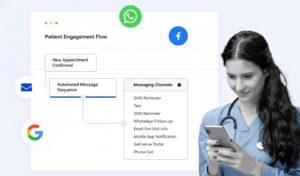
📋 The Neurology Patient Retention Automation Stack
Telemedicine as a Marketing Differentiator
Telemedicine is one of the most underutilised marketing advantages available to modern neurologists. For follow-up consultations, medication reviews, second opinions, and initial consultations for patients in remote areas, a teleconsult option removes both a geographic barrier and an access barrier. Patients who might wait months to see a neurologist in person will often book a teleconsult within days.
More importantly, prominently featuring telemedicine on your website, Google Business Profile, and social media is a genuine differentiator in most markets. Very few neurologists market their telemedicine capability effectively. Feature it on your homepage, create a dedicated telemedicine page explaining how it works, and actively promote it in your Google Ads campaigns as a separate offering.
Phase 6 of 6Your 90-Day Week-by-Week Marketing Roadmap
WEEK 1: Audit, Setup & Foundation
Focus: Understand your starting point before spending anything. Get the basics right
- Search “neurologist in [Your City]” from a private browser — note who ranks in the local 3-pack and what they have that you don’t
- Fully audit and optimise your Google Business Profile — category, services, photos, hours, Q&A section
- Set up Google Analytics 4 and Search Console on your website if not already done
- Set up your WhatsApp review request message and train front-desk staff — start collecting reviews immediately
- Create your referral information pack — one A4 page of your sub-specialties and referral process
- Identify 20 GP clinics within 10km — add to a simple spreadsheet with contact numbers
- Record your baseline KPIs: review count, ranking position for top keyword, monthly website sessions
WEEKS 2–3: Referral Outreach & Content Launch
Focus: Start your referral network programme and publish your first content assets.
- Visit 5 GP clinics per week — introduce yourself, leave your referral pack
- Write and publish Month 1 Blog Posts 1 and 2 from your content calendar
- Set up or refresh your LinkedIn profile with your subspecialties and a professional photo — start posting twice per week
- Set up appointment reminder WhatsApp/SMS automation in your practice management software
- Set up or optimise your Instagram and Facebook business profiles
- Record and publish your first YouTube video — “What to Expect at Your First Neurology Appointment”
WEEKS 3–4: Paid Ads Launch & First Review
Focus: Launch your first Google Ads campaign and review your first month’s numbers.
- Launch Google Ads Campaign 1 — your highest-volume condition (typically migraine or headache) with a dedicated landing page
- Publish Month 1 Blog Posts 3 and 4 from your content calendar
- Review your KPI dashboard — note any movement in rankings, GBP views, or review count since Week 1
- Send your referral feedback letter template to every GP-referred patient this week — start building this habit
- Follow up by phone with the first 10 GP clinics you visited
MONTH 2: Scale What’s Working
Focus: Use Month 1 data to double down on your best-performing activities.
- Publish all 4 Month 3 blog posts including your local authority content piece.
- Launch an Instagram Reels series — 4 short videos of the doctor answering common questions.
- Launch a Meta retargeting campaign targeting website visitors who didn’t book an appointment.
- Activate a Lookalike Audience campaign based on your existing patient email list.
- Host your first physician referral dinner or clinical update breakfast.
- Complete your 90-Day Review: fill in KPI dashboard with Month 3 numbers vs. baseline.
- Identify your top 3 performing blog posts. Plan follow-up content on related topics for Month 4–6.
MONTH 3: Optimise, Expand & Lock In Results
Focus: Turn early momentum into a sustainable, repeatable patient acquisition system.
- Publish all 4 Month 3 blog posts including your local authority content piece
- Launch a Meta retargeting campaign targeting website visitors who did not book an appointment
- Launch your Lookalike Audience campaign on Meta based on your existing patient list
- Host your first physician referral dinner or clinical update breakfast — invite your top 10 referral contacts
- Complete your 90-Day Review — fill in KPI dashboard with Month 3 numbers vs. baseline
- Identify your top 3 performing blog posts — create follow-up content on related topics for Months 4–6
- Promote your telemedicine service prominently — add it to your GBP, homepage, and a dedicated page
Conclusion: Your Patients Are Searching. Your Plan Decides What Happens Next.
Somewhere in your city right now, a caregiver is searching for a neurologist for their parent. A 32-year-old has just had her first seizure and is trying to understand what happens next. A GP has a patient with persistent unexplained headaches and needs to refer them to someone they trust.
Whether those people find you — and whether they choose you — is not determined by your clinical excellence alone. It is determined by your digital presence, your content, your reviews, your referral network, and the warmth and authority your website communicates in the first five seconds.
This marketing plan gives you the complete framework to compete and win, regardless of whether you are a solo neurologist, a multi-doctor practice, or a hospital neurology department. Work through each phase in order. Track your KPIs every Monday. And if you want a team that executes this plan for you — with healthcare expertise, transparent reporting, and no learning curve — iDigital Doctor is ready.