
SEO Service for Gynecologist
Consider this: a woman in your city wakes up with irregular bleeding and types “gynecologist near me” into Google at 11 pm. She is not calling a helpline. She is not opening a directory. She is searching — and in the next three minutes, she will either find your practice or your competitor’s.
That moment, that single search, is where patients are won and lost in 2026. And the discipline that determines whether your practice appears in that moment is called Search Engine Optimisation, or SEO, the concept of an SEO service for gynecologist practices remains vague, something their web developer mentioned once, or a line item in a digital marketing proposal they half-understood.
Trusted by healthcare professionals, clinics, and doctors.






What Is an SEO Service for Gynecologist Practices? A Plain-Language Explanation
SEO, Search Engine Optimisation — is the systematic process of improving your website’s visibility in organic (non-paid) search results. When a patient in your city searches “PCOS specialist near me” or “best gynecologist in [city],” the order in which practices appear is not random. It is determined by Google’s algorithm, which evaluates hundreds of factors across every website it has indexed.
An SEO service for gynecologist practices is a structured, ongoing program that works on your behalf to satisfy Google’s ranking criteria — so your practice climbs higher in results, attracts more organic traffic, and converts that traffic into booked appointments.
Unlike paid advertising (Google Ads), where your visibility disappears the moment you stop spending, SEO builds long-term compounding authority. The work done in month one continues generating returns in month twelve and beyond.
Over 1 billion healthcare-related searches happen on Google every single day. The question is not whether your patients are searching. The question is whether they are finding you.
Before booking a medical appointment, 70% people start searching for that doctor online.
SEO Service for Gynecologist Practices
A comprehensive gynecologist SEO programme is not a single tactic — it is a multi-layered strategy operating across six distinct disciplines simultaneously. Here is what each pillar involves and why it matters.
Unlike paid advertising (Google Ads), where your visibility disappears the moment you stop spending, SEO builds long-term compounding authority. The work done in month one continues generating returns in month twelve and beyond.

Technical SEO: The Foundation Google Builds On
Before any content or link-building strategy can work, your gynecologist’s clinic website design must be technically good, so that your website’s technical SEO ensures Google can efficiently crawl, understand, and index every page of your site. This includes:
Keyword Research: Speaking the Language Your Patients Use
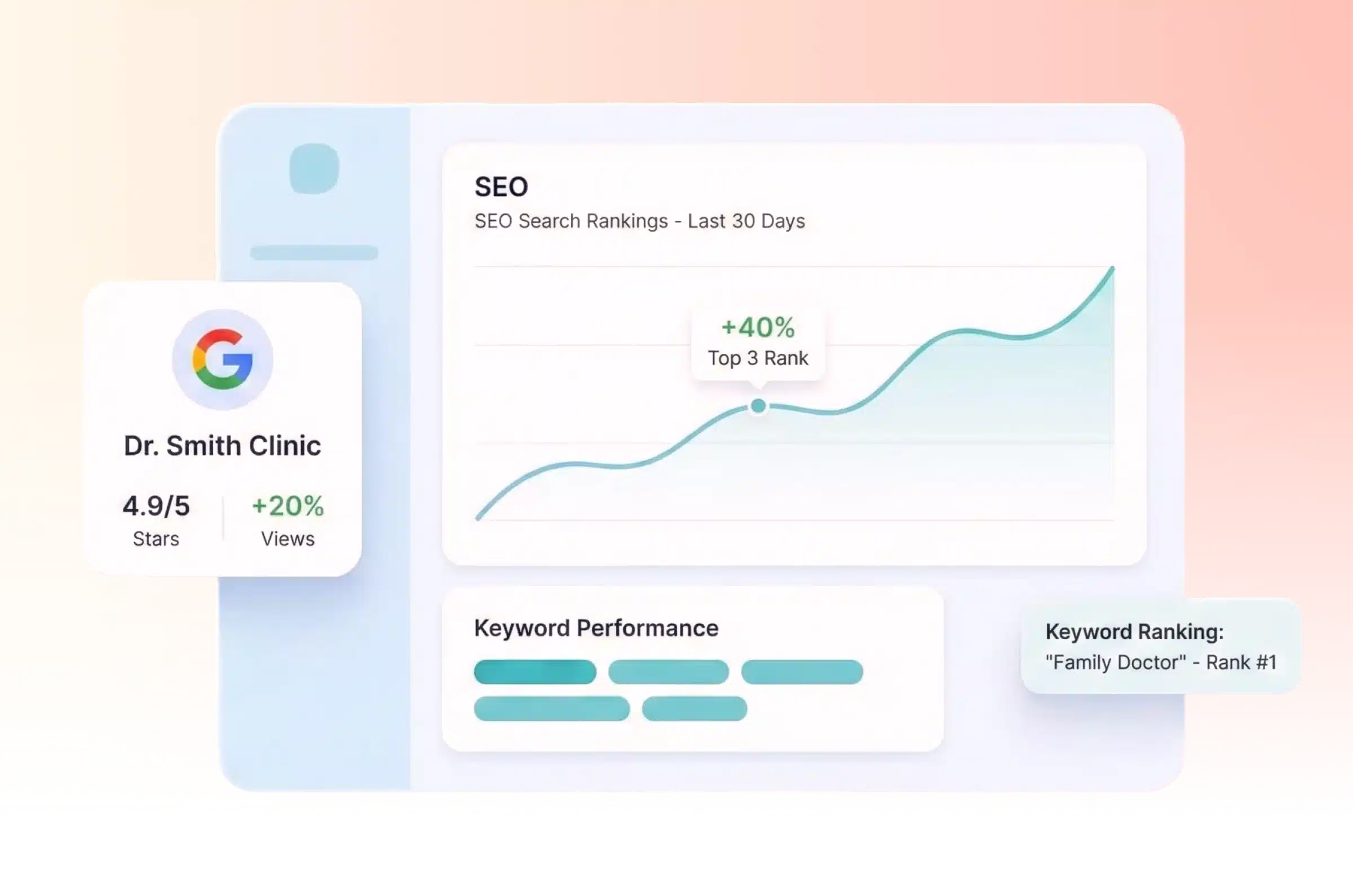
Keyword research is the intelligence layer of your SEO strategy. It answers one critical question: what exact words and phrases are your ideal patients typing into Google when they need a gynecologist?
On-Page SEO: Telling Google Exactly What You Do
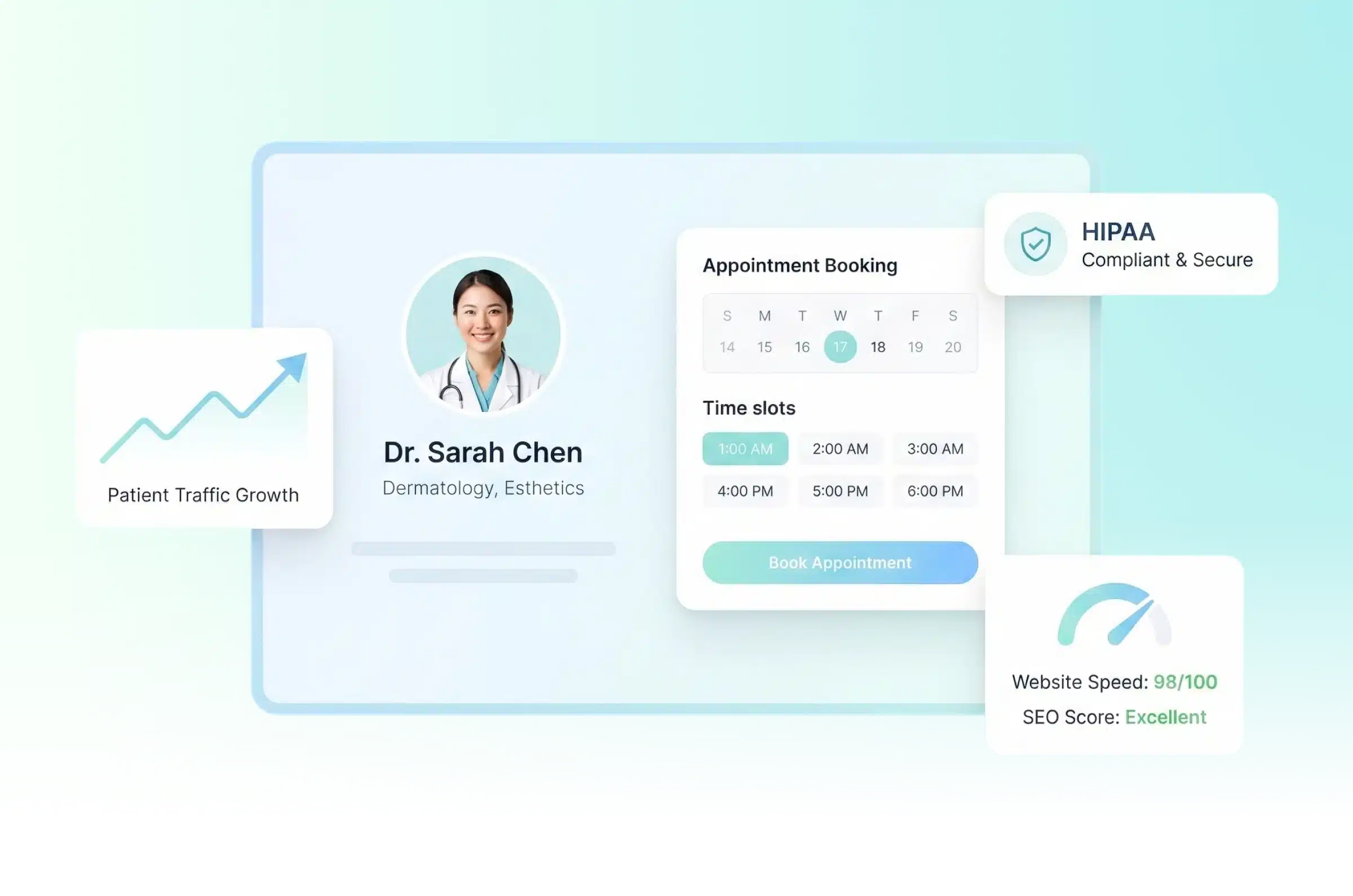
On-page SEO is the process of optimising the content and HTML elements of each page on your website. For a gynecology practice, this means:

Local SEO: Dominating the Map Pack in Your City
“Near me” searches for healthcare services have grown by over 200% in recent years (Google Trends). For a gynecologist, local SEO is arguably the highest-ROI component of the entire strategy because it targets patients who are geographically nearby and actively ready to book.
Content Marketing: Building Authority Through Education
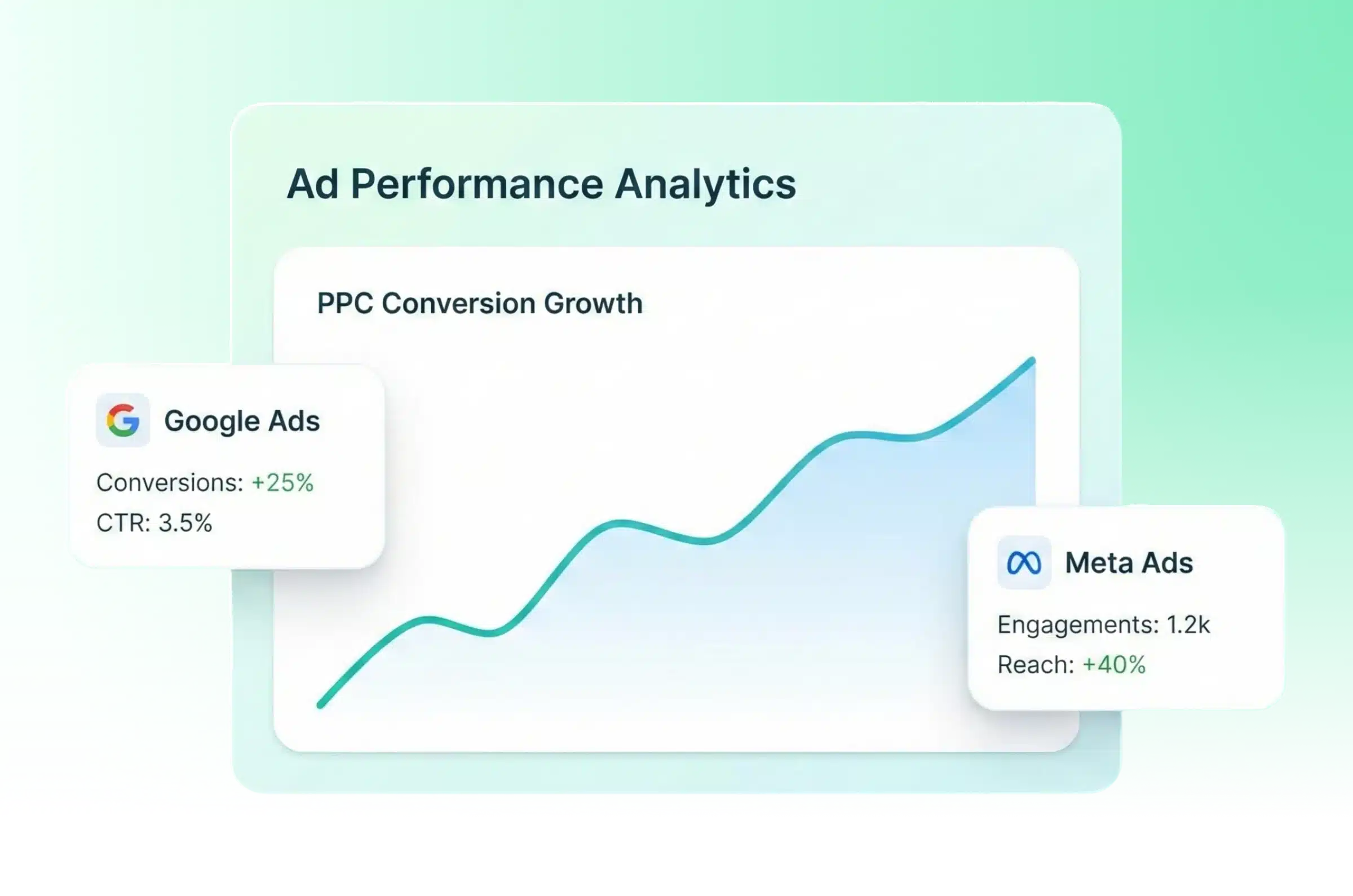
Google’s E-E-A-T framework — Experience, Expertise, Authoritativeness, Trustworthiness — applies with particular force to medical websites, which Google classifies as YMYL (Your Money, Your Life) content. For an SEO service for gynecologist practices, content marketing is the engine that builds this authority over time.

Link Building and Online Authority
Link building — the process of earning hyperlinks from other credible websites to yours — remains one of Google’s most significant ranking factors. For gynecology practices, high-quality backlinks from medical directories, health publications, local news websites, and regional healthcare organisations signal to Google that your practice is a trusted, authoritative source.
Ethical link-building for gynecologists includes guest contributions to women’s health publications, listings in premium medical directories, local business associations, and hospital affiliation mentions — all of which accumulate domain authority that compounds over time.
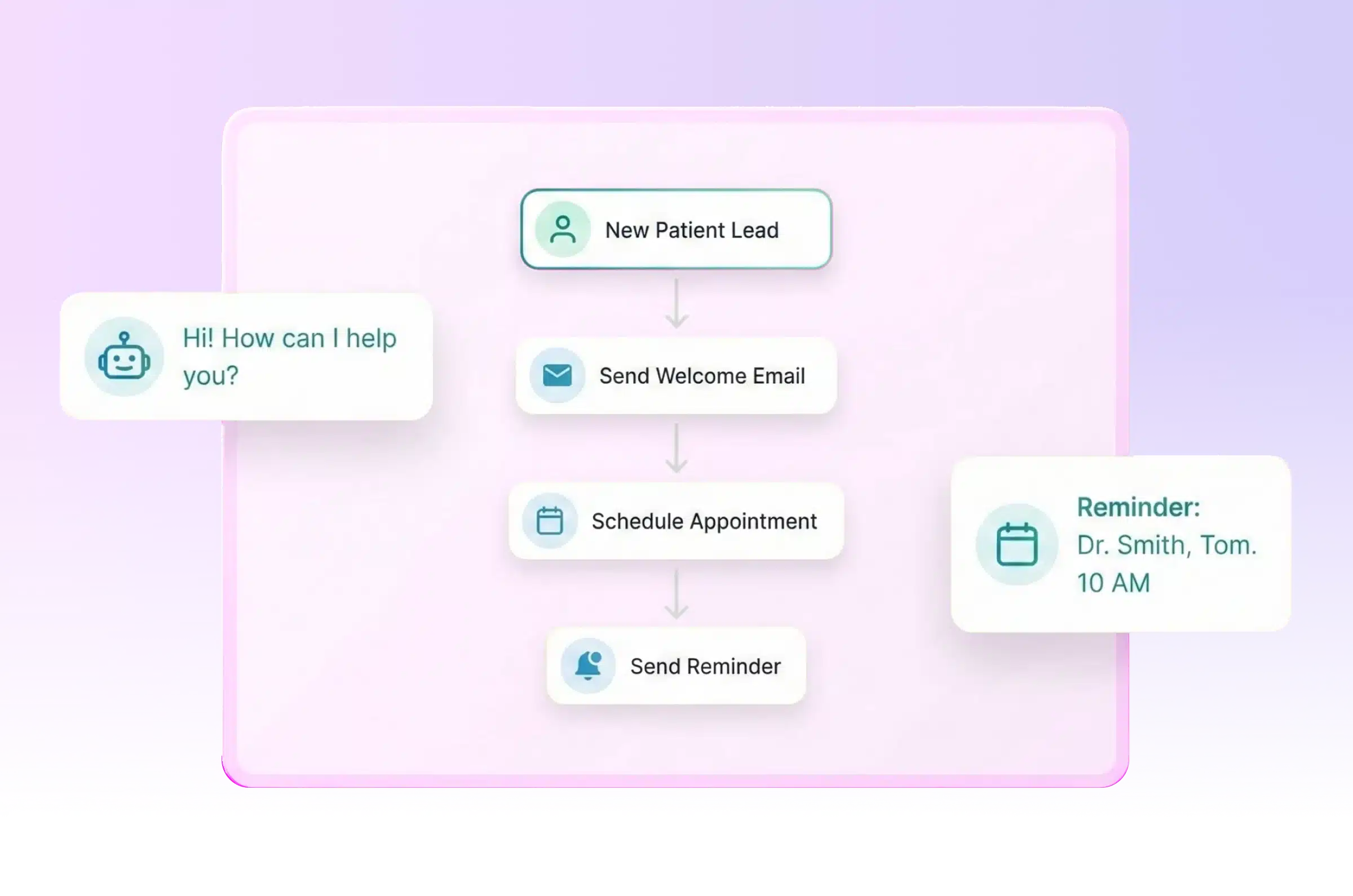
Our Case Studies
See our verified success stories: proven digital strategies driving real patient growth for healthcare practices.

Ayurvedic Clinic Achieves Professional Digital Credibility with Content and Brand Strategy
55%
40%
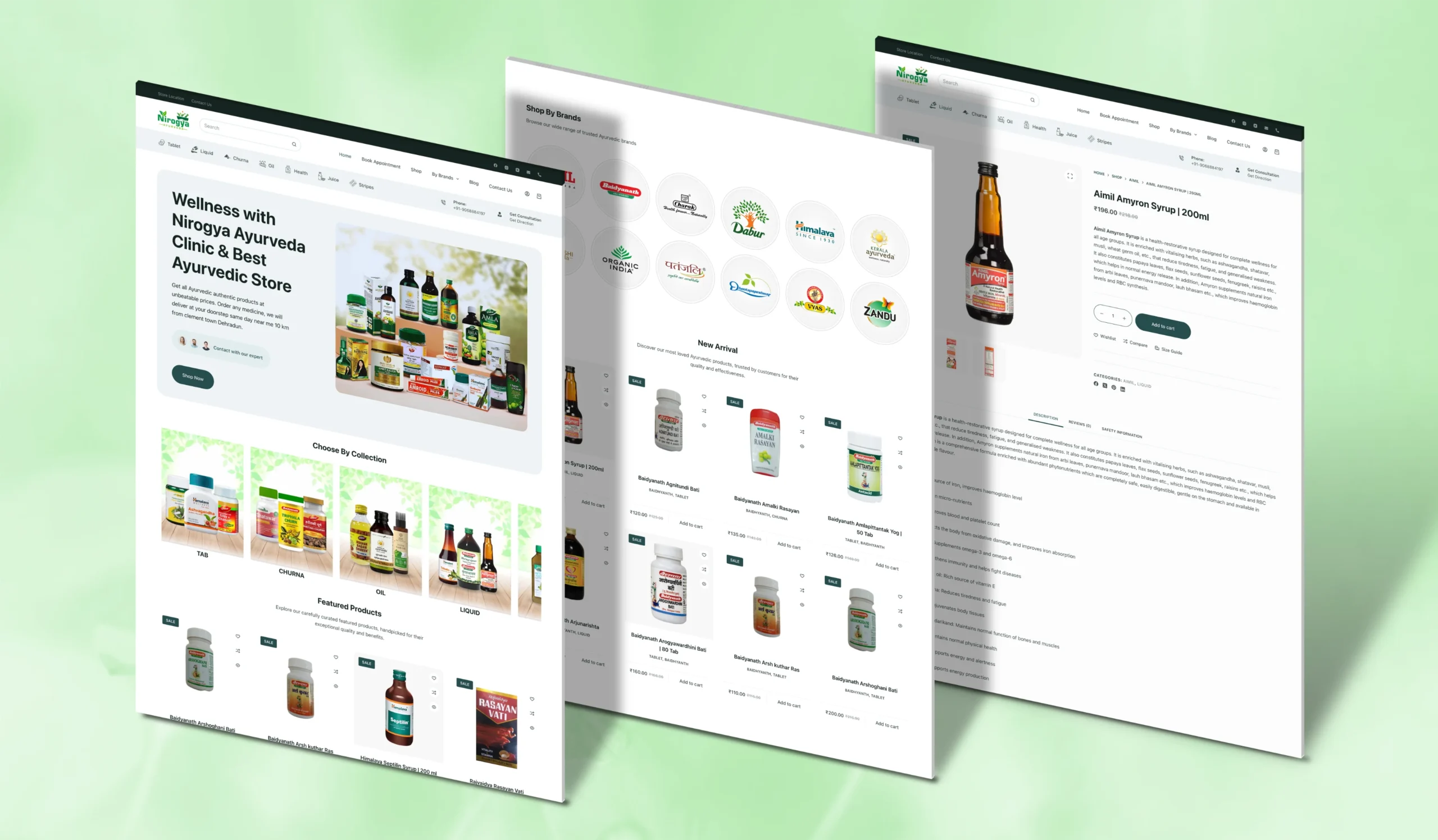
Building a Dual-Market Ayurveda Store for Traffic and Sales
75%
3X

3-Step Digital Authority Launch for a Leading Cardiology Specialist.
3X
15+

Orthodontic Provider Increases Leads by 26% Through Digital Foundation
26%
300%
How iDigital Doctor Delivers SEO for Gynecologists
Our SEO is not generic. It’s built around real patient search behavior, medical accuracy, and measurable growth — tailored specifically for gynecology practices.

Healthcare-Focused SEO Strategy
We don’t apply generic SEO. Every strategy is built around the gynecology patient intent, privacy behavior, and healthcare compliance from day one.

Built for Patient Trust, Not Just Traffic
We focus on building trust signals reviews, content, and experience so visitors actually convert into patients.

Local SEO & Google Visibility
We optimize your Google Business Profile, target city-level keywords, and improve local rankings to bring real patient enquiries.

Deep Audit & Data-Driven Roadmap
We start with a complete audit of technical SEO, keyword gaps, competitors, and local visibility then build a clear 12-month execution plan.

Medical Content That Ranks
Every blog and page is written for patients and reviewed for accuracy — helping you rank while building trust.

Ongoing Support & Maintenance
We don’t just deliver — we partner. Our team monitors, updates, and ensures your website grows with your practice.
What’s Our Client Say
Their team designed a clean, modern, and highly professional website for our clinic that truly reflects our brand. UI, and patient-focused layout have significantly improved our online presence. We are now able to present our aligner solutions with clarity and credibility. Highly recommended for healthcare branding and development.

We partnered with iDigital Doctor for website development and Google My Business SEO. Their team optimized our local presence, improved our rankings, and made our hospital more visible to patients searching online. The results were practical and measurable. They understand healthcare marketing deeply.

When we decided to improve our online presence, we wanted something simple, clean, and informative for our patients. The website now clearly explains our Ayurvedic treatments, and patients often mention they found us easily on Google. We’ve definitely seen more inquiries coming in. Overall, a smooth and professional experience.

As a cardiologist, I wanted a website that reflects professionalism and builds trust with patients even before they visit the hospital. The final design is clean, informative, and easy to navigate. Patients can now quickly understand our cardiac services and book appointments without confusion. very satisfied


-
SEO in 2026: The New Factors Gynecologists Must Know About
The landscape of an SEO service for gynecologist practices has evolved significantly in the past two years. Here are the 2026-specific factors that are now reshaping healthcare search:
-
AI Search and Generative Engine Optimisation (GEO)
AI search tools — including Google’s AI Overviews and ChatGPT — are now changing how patients find healthcare information. Around three in four Americans search with AI tools weekly, and health information is among the top use cases.
-
Voice Search Optimisation
Voice search now accounts for 28% of local medical searches. Patients are asking devices questions like “Where can I find a female gynecologist near me?” and “Is pelvic pain during pregnancy normal?” Your website content must include natural, conversational FAQ-style answers to these queries.
-
Mobile-First Indexing
Google now indexes the mobile version of your website first. Mobile SEO is responsible for 68% of all organic healthcare traffic (StatCounter). If your website does not perform perfectly on a smartphone — fast load times, easy navigation, tap-friendly booking buttons — your desktop rankings will also suffer.
FAQ
This is the question every gynecologist asks — and it deserves an honest answer.
According to Google’s own guidance, healthcare websites should expect 4 months to 1 year before seeing meaningful improvements in rankings and traffic. This timeline exists because Google’s algorithm requires time to evaluate the consistency, quality, and trustworthiness of your optimisations before rewarding them with higher rankings.
The true power of SEO is that, unlike paid advertising, the results compound. Traffic earned in month three does not disappear in month six. Authority built in year one continues growing in year two — making SEO the highest long-term ROI digital investment available to gynecology practices.
- Medical practices with optimised local keywords experience 45% higher conversion rates (Ahrefs)
- Structured data implementation alone yields a 25% increase in click-through rates for healthcare websites (Moz)
These are not outliers. They reflect what happens when a structured, healthcare-specific SEO strategy is implemented with patience and consistency.
This is one of the most common strategic questions gynecologists face. The honest answer is that both have a role — but they serve very different purposes.
Paid Ads (Google Ads / PPC) provide immediate visibility while your SEO authority is being built. They are valuable for new practices, specific campaign promotions, and time-sensitive patient acquisition. However, the moment you stop paying, your visibility disappears entirely.
SEO builds compounding long-term authority. It takes longer to produce results but, once established, delivers a lower cost per patient acquisition than any paid channel. 81% of healthcare marketers prioritise SEO over PPC for long-term growth (BrightEdge), and 65% of medical website traffic comes from organic search — surpassing both paid ads and social media (SEMrush).
For most established gynecology practices, the optimal strategy is to use paid ads for immediate patient acquisition while systematically building organic SEO authority for sustainable, lower-cost long-term growth.
Yes, local SEO is the most powerful channel for clinics. By optimizing your Google Business Profile, local pages, and citations, your clinic can appear in the top 3 map results — where most patients click and call.
Google Business Profile helps with visibility, but a website builds trust and improves rankings. Patients often visit your website before booking. Without a proper website, you lose credibility and conversion opportunities.
Reviews are one of the strongest ranking and trust factors. Clinics with more positive, recent reviews rank higher on Google Maps and get significantly more calls and bookings.
Yes, with proper local optimization, content strategy, and Google Business management, you can outrank competitors — especially those using generic marketing.
Yes, and often faster. New clinics can quickly gain visibility by optimizing Google Business Profile, building local pages, and creating targeted content.
Common reasons include poor local SEO, lack of proper keyword targeting, weak or generic content, fewer patient reviews, and technical issues on the website. SEO helps fix these gaps to improve visibility and patient enquiries.
What makes iDigital Doctor different is our focus on patient psychology, trust-building content, local and vernacular SEO, and conversion optimization. We don’t just drive traffic — we focus on bringing real patient enquiries and growth for your clinic.

